
Navigating Ozempic Marriage Problems and Relationship Friction Significant weight loss changes more than just your body. Here is how to handle shifting relationship dynamics and an unsupportive partner.

Ozempic marriage problems rarely stem from the medication itself. They usually happen because rapid weight loss shatters the shared habits and routines that once anchored the relationship.
When a couple bonds over food, changing those habits can leave the other partner feeling left behind or insecure about the future.
Key Takeaways
- Partners often project their own insecurities onto your physical changes.
- Micromanaging your diet is frequently a masking behavior for jealousy or a loss of control.
- The loss of a shared eating routine can trigger feelings of abandonment.
- Setting clear boundaries around food comments is essential for protecting your progress.

Coach Claire Tip
Recognize that their anxiety belongs to them. You do not have to shrink your progress to make your partner feel secure in the relationship.
Starting a GLP-1 medication often feels like a personal health victory. But as the scale drops, a surprising new challenge can emerge at home. Many patients find themselves completely blindsided when a husband resents weight loss instead of celebrating it.
The friction usually starts small. It might look like passive aggressive comments about your new portion sizes or sudden complaints that you no longer want to order takeout on Friday nights. Over time, these minor grievances can snowball into major arguments.
You are not imagining this tension. The physical changes brought on by medications like Wegovy and Zepbound frequently disrupt the established routines of a relationship. When one partner transforms their lifestyle, the entire household feels the impact.
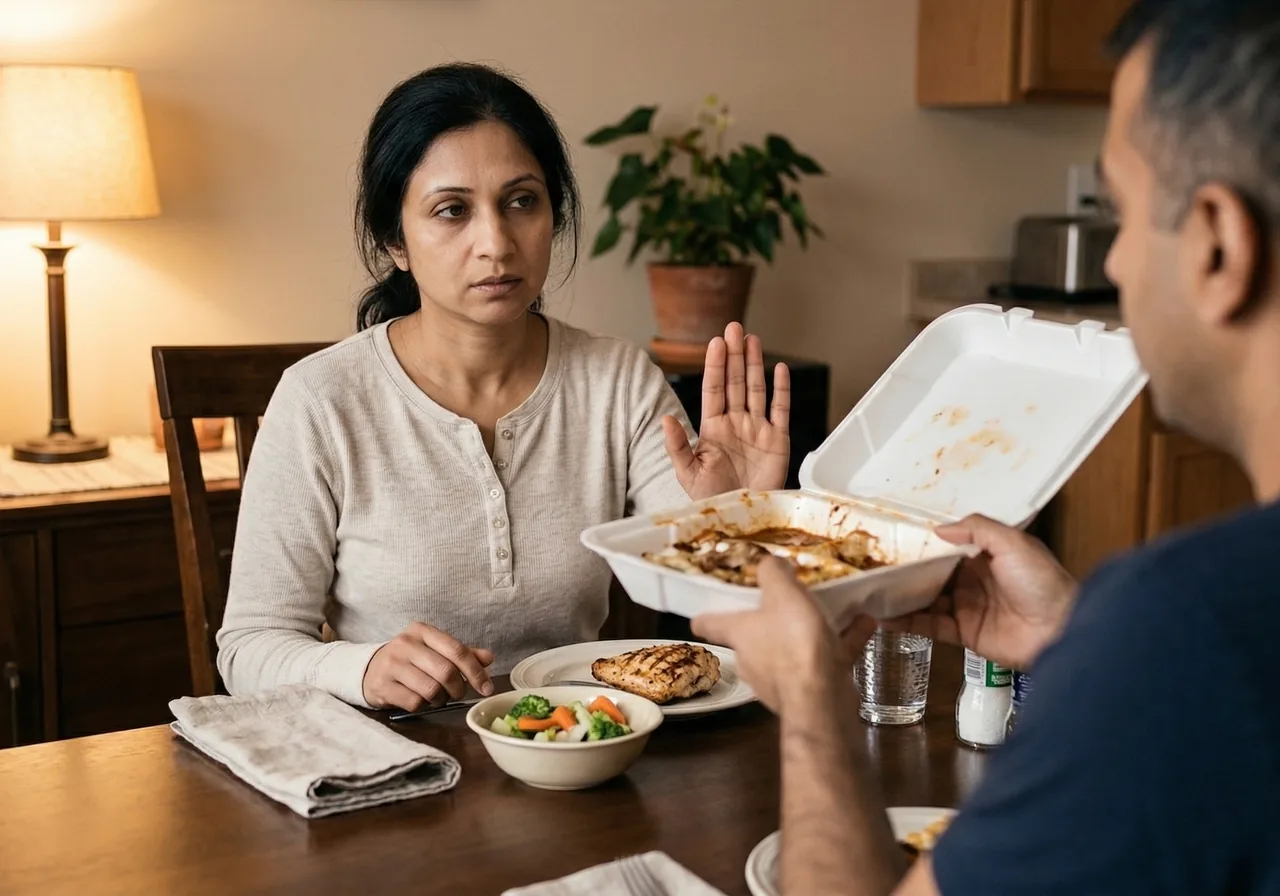
When your Ozempic success isn't celebrated by everyone...
What people are reacting to
Online support groups are filled with people experiencing this exact relationship turbulence. Patients frequently log on to share their confusion after a spouse reacts poorly to their shrinking waistline.
r/ZepboundPartner Is Extremely Upset That I Am Starting

r/ZepboundStrange Reaction From My Husbandunexpected Side

r/ZepboundIndifference Or Jealousy
What that usually means underneath
- Pattern 1: Commenters frequently point out that the partner is projecting their own deep seated insecurities and fear of abandonment.
- Pattern 2: Many users identify subtle sabotage disguised as care, such as pushing high calorie foods or questioning protein intake.
- Pattern 3: The community often discusses the destabilization of the fat couple dynamic, where eating was the primary shared bonding activity.
These are anonymized Reddit thread patterns, not medical evidence. FMG uses them to describe real-world tension, not to diagnose anyone.
The Editor's Take
This friction is a predictable psychological reaction to a disrupted baseline. Your partner is panicking about where they fit into your new life and mourning the loss of the relationship dynamic they understood.
Decoding the Jealousy
The unmedicated spouse often experiences your weight loss as a threat to the relationship homeostasis. When you stop participating in the late night snacking or heavy weekend dinners, they lose a reliable source of connection.
This loss of connection breeds anxiety. Without the shared language of food, partners may unconsciously try to pull you back into old habits to restore their own sense of security.
The conflict usually sounds emotional before it sounds accurate.
| What They Say (The Friction) | What It Usually Signals |
|---|---|
| Are you sure you are eating enough today? | I feel disconnected from you now that we do not share meals the same way. |
| You are changing your entire personality just to get attention. | I am terrified that your new confidence means you will outgrow me and leave. |
| We never go out and have fun anymore. | I do not know how to bond with you if food and drinking are no longer the main event. |
The Sabotage of Concern: Partners rarely say they want you to fail. Instead, they frame their anxiety as worry for your health. They might question your calorie intake or suggest that your medication is making you too thin. This creates a confusing environment where you feel guilty for succeeding.
Setting Boundaries at Home
You need a strategy for handling a spouse sabotaging diet efforts, even if they claim they are just trying to help. Protecting your peace requires clear, compassionate, and firm communication.
The goal is to reassure your partner of your commitment to the relationship while drawing a hard line around your bodily autonomy. You have to separate your health journey from their emotional reactions.

-
Name the exact change
Replace vague panic with a specific observation. Readers do better when they can describe what changed before they try to explain why.
"Something about this feels different lately. I am noticing it most in my mood, motivation, or day-to-day routine, and I want to pay attention to that clearly instead of brushing it off."
-
Protect one stabilizing routine
Do not overhaul everything at once. Keep one anchor that makes the day feel more recognizable while you assess the rest.
"I am keeping one steady routine on purpose right now so I can tell what is actually helping and what is making this harder."
-
Tell one person what is actually different
Use plain language with someone you trust. Good support starts with a clean description, not a dramatic headline.
"I do not need you to fix this, but I do want you to know what has changed for me so I am not carrying it alone or pretending it is nothing."
-
Escalate when function starts sliding
Once the shift starts affecting work, sleep, adherence, eating, or social function, lifestyle coping is no longer the whole answer.
"This is affecting my day-to-day functioning enough that I want to bring it to my clinician with a clear description instead of just hoping it passes."
Scripting the Conversation: When tensions rise, avoid arguing about the medication itself. Keep the focus on how their comments make you feel and what specific behaviors need to change. Having a few rehearsed responses can keep the conversation from spiraling into a fight.

When The Conversation Needs Backup
Navigating these changes alone can be exhausting, especially when your primary support system is the source of the stress.
- The shifting power dynamics in a marriage during significant weight loss are complex. As you gain confidence and physical energy, the roles you both played for years are suddenly upended.
- These Ozempic marriage problems are a common experience, but they do not mean your relationship is doomed. If your partner refuses to adjust or becomes increasingly hostile, couples counseling can provide a neutral space to rebuild your connection.
- If symptoms, side effects, or a plateau are part of the stress load, start with dealing with an insecure husband.
- You can also keep the handoff practical with GLP-1 side effects and Ozempic stopped working when the emotional strain is overlapping with medication questions.
Your health journey is a permanent lifestyle change. With patience and clear boundaries, you and your partner can find a new, healthier normal together.
Coach Claire's closing note
You do not need to minimize a real change just because it is hard to explain. Name what is happening, protect the routines that help, and bring in clinical support when the pattern starts affecting function.
Medical disclaimer: This content is for educational purposes only and is not medical advice, diagnosis, or treatment. Always consult a licensed healthcare professional before starting, stopping, or changing any medication or care plan.
References
- Reddit. r/Marriage: Im So Tired Of Carrying The Mental Load And Im. [top]
- Reddit. r/Marriage: My Wife Is Unsupportive Of My Weight Loss This. [top]
- Reddit. r/Zepbound: My Spouse Told Me That For The First Time In. [top]
- Reddit. r/Zepbound: Strange Reaction From My Husbandunexpected Side. [top]
- Reddit. r/Zepbound: Partner Is Extremely Upset That I Am Starting. [top]
- Reddit. r/Zepbound: Indifference Or Jealousy. [top]
- Weight loss drugs: Doctor who prescribed Ozempic to her partner is suspended [top]
- Mounjaro: GP incentive to prescribe weight loss jabs won’t tackle rollout problems, experts warn [top]