
Weekly GLP-1 Medication Change Questions to Discuss With Your Clinician A care-plan discussion about timing, side effects, cost, and safety questions.


THE BOTTOM LINE
- Different Mechanisms: Ozempic (semaglutide) is a GLP-1 receptor agonist, while Mounjaro (tirzepatide) is a dual-agonist that targets both GLP-1 and GIP receptors. This dual action is why Mounjaro often leads to greater weight loss and A1c reduction. 12
- Superior Efficacy: Head-to-head clinical trials have shown that tirzepatide produces significantly more weight loss than semaglutide. One major study found an average weight loss of nearly 21% with tirzepatide versus about 13% with semaglutide over 72 weeks in adults with obesity but not diabetes. 1
- Switching Requires a Ask your clinician about: A safe transition involves a specific "washout" period. The standard medical guidance is to take your last dose of Ozempic, wait one week for the drug to partially clear from your system (based on its drug half-life), and then begin Mounjaro at its lowest starting dose. 2
- Re-Titration is Mandatory: When switching from Ozempic to Mounjaro, you must start over with the Mounjaro treatment planning schedule. This means beginning at the 2.5 mg starting dose and slowly increasing every four weeks as directed by your provider to manage side effects and find the most effective dose for you. 3
- Side Effects & Costs: Gastrointestinal side effects like nausea are common with both drugs, especially during dose escalation. 3 Insurance coverage, particularly for off-label use for weight loss, can be a significant hurdle, often requiring prior authorization. 4
What This Switching Review Covers
- Why A Direct Dose Match Between Ozempic And Mounjaro Is Not Safe
- How The Washout And Restart Steps Usually Work
- What To Expect When Tirzepatide Reintroduces Appetite And GI Changes
- How Access, Coverage, And Cost Can Change During The Switch
Why Switch from Ozempic to Mounjaro?
people and their doctors consider switching from Ozempic to Mounjaro for several key reasons, primarily driven by Mounjaro's potential for enhanced clinical outcomes. 5 Because these are different molecules with distinct mechanisms of action, an individual may respond better to one than the other. The decision to switch is often based on a desire for greater efficacy, improved tolerance, or sometimes, logistical factors like insurance availability, which has become part of a larger societal conversation about these medications. 6
The most common motivations for making the switch include:
- Seeking Greater Weight Loss: Clinical evidence consistently shows that tirzepatide (Mounjaro) leads to more significant weight loss than semaglutide (Ozempic/Wegovy). 39 For individuals who have hit a weight loss plateau on Ozempic or who have not reached their weight management goals, switching to Mounjaro offers a scientifically supported path to further progress.
- Improved Blood Sugar (A1c) Control: For people with type 2 diabetes, Mounjaro has demonstrated superior A1c reduction compared to semaglutide in head-to-head clinical trials. 110 Its dual action on both GIP and GLP-1 pathways can offer more robust glucose regulation for some people. 7
- Managing Side Effects: While both drugs share a similar gastrointestinal side effect profile, some individuals may tolerate one better than the other. A person experiencing persistent, unmanageable side effects on Ozempic might find relief by switching to Mounjaro, although re-titration from the lowest dose is still required. 15
- Overcoming Metabolic Adaptation: During significant weight loss, the body can enter a state called metabolic adaptation, where it becomes more energy-efficient and burns fewer calories, often leading to a plateau. 8 Switching to a different medication with a distinct mechanism, such as from a single to a dual-agonist, can sometimes help overcome this physiological stall.
Start Quiz
Find your best GLP-1 match
Where should compare start?
Changing treatment next?
Compare switching support
Coach Claire says:
Considering a switch from Ozempic to Mounjaro? You're not alone. Many people explore this change hoping for better results, whether that means breaking through a weight loss plateau or achieving tighter blood sugar control. While both are powerful weekly injections, they work differently, and Mounjaro's dual-action approach has shown impressive results in clinical studies.
Making the change isn't as simple as swapping one pen for another. It requires a careful, medically supervised plan to ensure your safety and success. This guide will walk you through the entire process of switching from Ozempic to Mounjaro, from the science behind the drugs to the overview care plan discussion for making the transition.
Ozempic vs. Mounjaro: Key Differences

While both Ozempic and Mounjaro are once-weekly injectable medications, they are not interchangeable. The primary distinction lies in their mechanism of action. Ozempic, with its active ingredient semaglutide, is a GLP-1 receptor agonist. It works by mimicking a single gut hormone (GLP-1) to slow digestion, suppress appetite, and stimulate insulin secretion in response to glucose. 2
Mounjaro, with its active ingredient tirzepatide, is a first-in-class dual-agonist. It targets not only the GLP-1 receptor but also the GIP agonist receptor (glucose-dependent insulinotropic polypeptide). 25 This synergistic action on two separate hormone pathways is believed to be the reason for its more pronounced effects on both blood sugar and body weight compared to GLP-1-only medications. 9 The SURMOUNT-5 trial directly compared the highest doses of tirzepatide and semaglutide for obesity treatment, finding tirzepatide to be superior in reducing body weight. 1
| Feature | Ozempic (semaglutide) | Mounjaro (tirzepatide) |
|---|---|---|
| Mechanism | GLP-1 Receptor Agonist 2 | Dual GLP-1 and GIP Receptor Agonist 3 |
| Primary Indication | To improve glycemic control in adults with type 2 diabetes 2 | To improve glycemic control in adults with type 2 diabetes 3 |
| Weight Loss Version | Wegovy (semaglutide) 10 | Zepbound (tirzepatide) 4 |
| Avg. Weight Loss | ~15% (Wegovy 2.4mg dose) 11 | >20% (highest dose) 12 |
| Cardiovascular Benefit | Proven to reduce risk of major adverse cardiovascular events in people with T2D and established cardiovascular disease 2 | Cardioprotective effects are under investigation in the SURPASS-CVOT trial 13 |
Another key difference is in established cardiovascular benefits. Semaglutide has been proven to reduce the risk of major adverse cardiovascular events (like heart attack and stroke) in adults with type 2 diabetes and known heart disease, a finding included in its FDA label. 2 A separate trial, SELECT, also showed it reduced this risk in people with obesity and cardiovascular disease but without diabetes. 14 While tirzepatide has shown positive effects on markers of cardiovascular health like blood pressure and lipids, its dedicated cardiovascular outcomes trial (SURPASS-CVOT) is still ongoing. 13
The Care plan discussion for Switching from Ozempic to Mounjaro
Switching medications requires a clear, safe plan supervised by a healthcare provider. The standard medical guidance involves a "washout" period to prevent drug overlap. This process is designed to minimize the risk of additive side effects from having two potent medications active in your system at once.
The transition from Ozempic to Mounjaro is not a direct dose-for-dose conversion. Because Mounjaro is a different and potent medication, you must restart the treatment planning schedule from the very beginning. This process is known as re-titration, and it is essential for safety and tolerability. 3
The Caution: Do Not Overlap Doses.
Never take Mounjaro and Ozempic at the same time. The combined effect can significantly increase the risk of severe gastrointestinal side effects, including nausea, vomiting, and diarrhea. Following the washout period is critical for a safe transition.
The Ask your clinician about: A 3-Step Switching Process
- Stop Ozempic: Take your final dose of Ozempic on your regularly scheduled day. Do not take any more doses after this. Mark this date on your calendar.
- Observe the "Washout" Period: Wait at least 7 full days after your last Ozempic dose before starting Mounjaro. This one-week interval is based on the drug half-life of semaglutide, which is approximately 7 days. 2 A one-week washout allows the concentration of Ozempic in your body to decrease by about 50%, reducing the risk of overlapping side effects when you start the new medication. During this week, you may notice a return of appetite or changes in your blood sugar levels.
- Start Mounjaro at the Lowest Dose: After the 7-day washout period, you will begin Mounjaro at its initial starting dose of 2.5 mg once weekly. This dose is for initiating treatment and helping your body acclimate; it is not considered a therapeutic dose for glycemic control or significant weight loss. 3
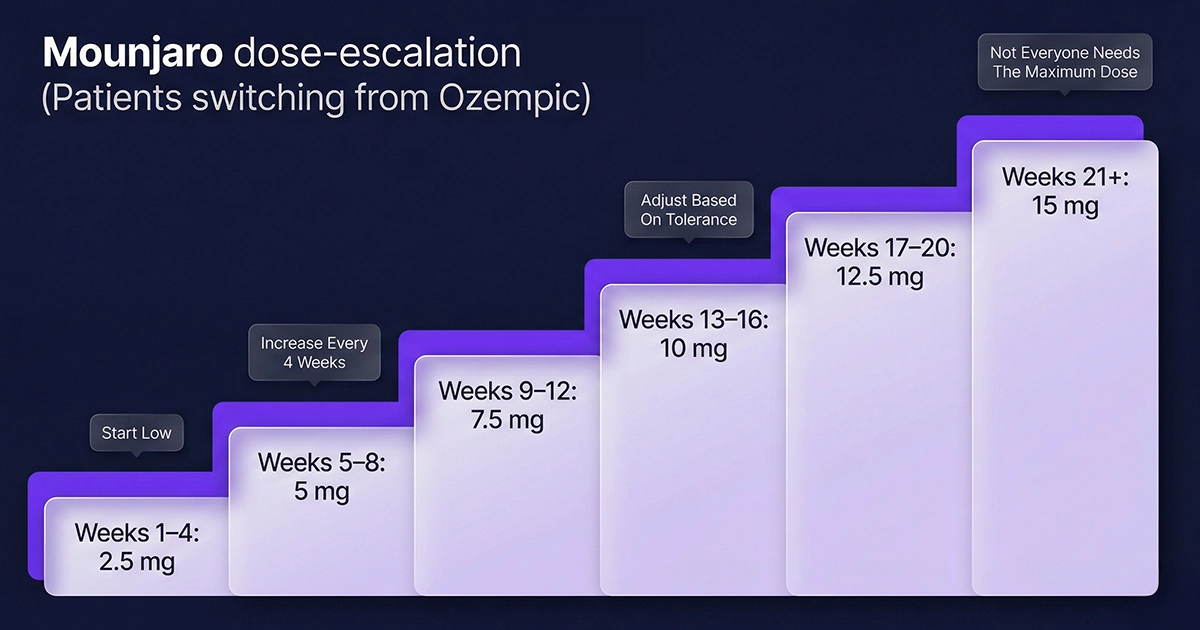
After starting Mounjaro, you will follow the standard titration schedule. Your doctor will instruct you to increase the dose every four weeks, as long as you are tolerating it well. 3

The Timeline: Mounjaro Titration Schedule
The FDA-reviewed titration schedule for Mounjaro is as follows: 3
- Weeks 1-4: 2.5 mg once weekly
- Weeks 5-8: Increase to 5.0 mg once weekly
- Weeks 9-12: Increase to 7.5 mg once weekly
- Weeks 13-16: Increase to 10.0 mg once weekly
- Weeks 17-20: Increase to 12.5 mg once weekly
- Weeks 21+: Increase to the maximum dose of 15.0 mg once weekly
Your provider will determine the right pace of titration and your final maintenance dose based on your treatment goals and how well you tolerate the medication. Not everyone needs to reach the maximum dose to see significant results.
Coach Claire Tip:
If side effects feel severe or unmanageable, don't just 'tough it out.' Contact your provider. They may suggest staying at a lower dose for longer, prescribing medication for nausea, or adjusting your injection timing. Open communication is key to a successful transition.
Managing Side Effects During the Transition

Restarting the titration process when switching from Ozempic to Mounjaro means you may re-experience the initial gastrointestinal side effects common to this class of drugs. 15 These effects are most common during dose-escalation periods and typically lessen as your body adjusts to each new dose. 3
The Problem: Nausea
Nausea is the most frequently reported side effect. It often occurs in the first few days after an injection, especially after a dose increase, due to the drug's effect of slowing stomach emptying. 3
What to ask: Eat smaller, more frequent meals. Opt for bland, low-fat foods like crackers, toast, and rice. Avoid greasy, spicy, or very sweet foods. Sipping clear, cold beverages can also help. 16
The Problem: Diarrhea
Increased bowel frequency or loose stools can occur as your digestive system adapts to the new medication.
What to ask: Prioritize foods that can help bind stool, such as those in the "BRAT" diet (bananas, rice, applesauce, toast). It is crucial to drink plenty of fluids with electrolytes to prevent dehydration. Avoid foods known to worsen diarrhea, like dairy, high-fat foods, and artificial sweeteners. 17
The Problem: Constipation
Conversely, the profound slowing of digestion can lead to constipation for some individuals.
What to ask: Gradually increase your intake of dietary fiber from sources like fruits, vegetables, and whole grains. It is essential to drink plenty of water throughout the day, as fiber without adequate hydration can worsen constipation. Gentle physical activity can also help. 18
Risks and Cost Considerations When Switching
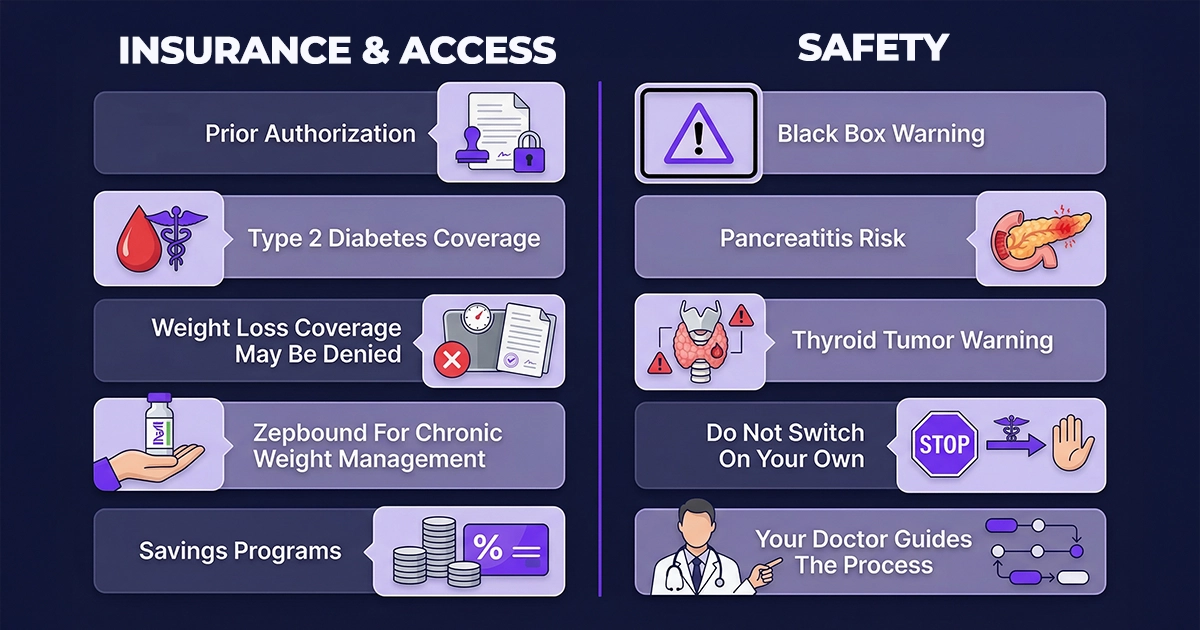
Before making the change, it is essential to consider potential risks and logistical challenges, particularly concerning insurance and cost. A thorough discussion with your doctor and a call to your insurance company are critical first steps.
The Warning: Insurance Hurdles and Prior Authorization
Mounjaro is an expensive medication, and insurance coverage can be complex. Most insurance plans require a prior authorization (PA). This is a process where your doctor must submit clinical justification to your insurer explaining why this specific drug is medically necessary for you. 19
- For Type 2 Diabetes: Coverage is more likely if you have a diagnosis of type 2 diabetes, as Mounjaro is FDA-reviewed for this indication. 3 Insurers may still require you to have tried and failed other, less expensive medications first.
- For Off-Label Use (Weight Loss): Gaining review for Mounjaro for off-label use for weight loss alone is very difficult. Insurers frequently deny these requests. In this case, your provider should prescribe Zepbound, which contains the same active ingredient (tirzepatide) but is specifically FDA-reviewed for chronic weight management. 4 Coverage for Zepbound also typically requires a prior authorization.
The Warning: Pancreatitis and Thyroid Cancer Risk
Both Ozempic and Mounjaro carry a boxed warning from the FDA - its most serious type of warning - regarding a potential risk of thyroid C-cell tumors, based on studies in rodents. 45 Because the relevance to humans is unknown, neither drug should be used by individuals with a personal or family history of medullary thyroid carcinoma (MTC) or Multiple Endocrine Neoplasia syndrome type 2 (MEN 2). Both drugs also carry warnings about acute pancreatitis. Switching medications does not eliminate these underlying risks.
The Rule: Your Doctor is Your Guide.
Switching GLP-1 medications is a medical decision that requires professional guidance. Do not attempt to switch on your own or obtain medication from unverified sources. Your doctor will create a safe transition plan, monitor your progress, manage side effects, and handle the necessary insurance paperwork.
If your insurance does not cover the medication, investigate manufacturer savings programs. The manufacturer, Eli Lilly, offers savings programs that may reduce the cost for eligible people with commercial insurance. The high cost of these drugs has become a notable point of public and political discussion. 20
Coach Claire's Takeaway
Switching medications is a significant decision, but you're now equipped with the information to have a confident conversation with your doctor. They can help you weigh the clinical evidence against your personal health history and goals. Remember, the 'right' medication is the one that is safe and effective for you.
Frequently Asked Questions
Can I change weekly GLP-1 medications without a washout period?
No, this is not recommended. The standard medical advice is to wait at least one week after your last Ozempic dose before starting Mounjaro. This "washout" minimizes the risk of severe side effects from having both drugs active in your system at once. 2 Always follow your doctor's specific instructions.
Will I definitely lose more weight on Mounjaro?
While clinical trials show higher average weight loss with Mounjaro compared to Ozempic, individual results will vary. 1 The dual-agonist mechanism offers a strong potential for enhanced results, but it is not a promise for every person.
What if my insurance won't approve Mounjaro for weight loss?
If your prior authorization for Mounjaro is denied for weight loss, ask your provider about prescribing Zepbound instead. Zepbound is the same medication (tirzepatide) but is FDA-reviewed for chronic weight management, which may make insurance review more likely. 4 If cost is still a barrier, manufacturer savings programs may be an option.
Do I have to start at the lowest 2.5mg Mounjaro dose if I was on the highest Ozempic dose?
Yes. Because they are different drugs with different hormonal targets and potencies, you must restart the treatment planning schedule from the beginning with Mounjaro's 2.5 mg initiation dose. This "start low, go slow" approach is crucial for safety and managing side effects. 3
Coach Claire's Cheat Sheet
Quick definitions used in this article.
Medical disclaimer: This content is for educational purposes only and is not medical advice, diagnosis, or treatment. Always consult a licensed healthcare professional before starting, stopping, or changing any medication or care plan.
References
- Aronne, L. J., et al. (2024). Tirzepatide versus Semaglutide for the Treatment of Obesity. The New England Journal of Medicine. [top]
- U.S. Food and Drug Administration. (2022). Ozempic (semaglutide) Highlights of Prescribing Information. FDA.gov. [top]
- U.S. Food and Drug Administration. (2022). Mounjaro (tirzepatide) Highlights of Prescribing Information. FDA.gov. [top]
- U.S. Food and Drug Administration. (2023). Zepbound (tirzepatide) Highlights of Prescribing Information. FDA.gov. [top]
- Azoury, M., et al. (2025). Use of tirzepatide (Mounjaro) in type 2 diabetes management: an overview. Nursing Standard. [top]
- Tannsjo, T. (2025). Ethical Issues Related to the Use of GLP-1 Receptor Agonists Such as Ozempic and Mounjaro: Impact on Individuals and Society at Large. Bioethics. [top]
- Deeks, E. D. (2024). Tirzepatide: A Review in Type 2 Diabetes. PubMed. [top]
- Muller, M. J., & Bosy-Westphal, A. (2010). Adaptive thermogenesis with weight loss in humans. Obesity (Silver Spring). [top]
- Mahapatra, M. (2025). Ozempic v Mounjaro: what is the difference between semaglutide and tirzepatide?. BMJ. [top]
- U.S. Food and Drug Administration. (2021). Wegovy (semaglutide) Highlights of Prescribing Information. FDA.gov. [top]
- Wilding, J. P. H., et al. (2021). Once-Weekly Semaglutide in Adults with Overweight or Obesity. The New England Journal of Medicine. [top]
- Jastreboff, A. M., et al. (2022). Tirzepatide Once Weekly for the Treatment of Obesity. The New England Journal of Medicine. [top]
- Bhatt, D. L., et al. (2023). Comparison of tirzepatide and dulaglutide on major adverse cardiovascular events in participants with type 2 diabetes and atherosclerotic cardiovascular disease: SURPASS-CVOT design and baseline characteristics. PubMed. [top]
- Lincoff, A. M., et al. (2023). Semaglutide and Cardiovascular Outcomes in Obesity without Diabetes. The New England Journal of Medicine. [top]
- Collins, L., & Costello, R. A. (2023). Glucagon-Like Peptide-1 Receptor Agonists. StatPearls [Internet]. [top]
- National Institute of Diabetes and Digestive and Kidney Diseases. (2016). Treatment for Gas in the Digestive Tract. NIDDK.NIH.gov. [top]
- National Institute of Diabetes and Digestive and Kidney Diseases. (2018). Treatment for Diarrhea. NIDDK.NIH.gov. [top]
- National Institute of Diabetes and Digestive and Kidney Diseases. (2018). Treatment for Constipation. NIDDK.NIH.gov. [top]
- American Medical Association. (2024). What is prior authorization?. AMA-assn.org. [top]
- Torjesen, I. (2025). Trump strikes deal with Ozempic and Mounjaro makers to cut prices of obesity injections. BMJ. [top]