
GLP-1 and Hair Loss:What's the Connection?A clinical guide to why GLP-1s like Ozempic and Mounjaro are linked to hair shedding, and what to ask a clinician about it.


THE BOTTOM LINE
- The Link is Indirect: Hair loss while taking GLP-1 medications is most often a temporary condition called telogen effluvium. This condition is caused by the physiological stress of rapid weight loss, not a direct effect of the drug on hair follicles. 1
- It's Usually Temporary: Telogen effluvium is a shedding of hair that typically begins 2 to 4 months after a trigger like rapid weight loss. In most cases, the shedding phase resolves, and hair begins to regrow as the body adapts. 2
- Your Body is Stressing Out: Excessive exercise, radical changes in your dietary intake, nutrient deficiencies are all possible culprits. Depending on your sex and age and underlying conditions, hormones may play a part and of course stress can be a factor. Estrogen plays a key role in hair growth and if your levels are low, it could add to the problem.
- Incidence is Low but Real: Clinical trials for weight management drugs like Zepbound (tirzepatide) and Wegovy (semaglutide) report alopecia (hair loss) as a side effect. The incidence is low (under 6%) but higher than in placebo groups, confirming a link with significant weight loss. 4, 5
- Nutrient Status is Key: Rapid weight loss and reduced food intake can lead to deficiencies in protein, iron, and zinc, which are crucial for healthy hair growth. Optimizing nutrition is a primary management strategy. 3
- Resist Replacing Food with Supplements: Don’t run out and buy a bunch of supplements. Instead talk with your Provider about the right solutions for you - some larger grocery chains even employ Registered Dieticians that can help you shop for foods with the right nutritional value for your weight loss journey.
- When to See a Doctor: While most cases resolve, it's important to consult a healthcare provider to rule out other causes of hair loss, especially if you experience patchy loss, scalp inflammation, or if shedding is severe or prolonged. 4
What This Medical Review Covers
- Common causes of GLP-1 related shedding
- What the regrowth timeline can realistically look like
- What to monitor before assuming the loss is permanent
- When it is time to ask a clinician for help
Start Quiz
Find your best GLP-1 match
Start with what matters most right now.
Need follow-up care options?
Compare follow-up support
Coach Claire says:
Noticing more hair in your brush or shower drain can be unsettling, especially when you're on a new health journey with a GLP-1 medication. It's a common concern, and you're right to ask about the connection.
The good news is that for the vast majority of people, this type of hair loss is temporary and not a sign that the medication is harming your hair follicles directly. Instead, it's often your body's response to the positive, rapid changes you're making. Let’s look at the science behind GLP-1 hair loss and the practical steps you can take to support healthy regrowth.
Watch: GLP-1 hair loss explained
This short medical explainer covers the likely cause, the usual shedding timeline, and the practical next steps if your hair starts thinning on a GLP-1.
Is GLP-1 Hair Loss a Direct Side Effect?
When experiencing side effects from a new medication, it's natural to question if the drug itself is the cause. With GLP-1 (Glucagon-like peptide-1) medications - a class of drugs that mimic a gut hormone to manage blood sugar and promote weight loss - the answer regarding hair loss is nuanced.
While some people do report alopecia, the primary trigger is often not the drug itself but one of its intended effects: significant and rapid weight loss. 1, 7
The Big Question: Is the GLP-1 medication causing my hair to fall out, or is it the rapid weight loss? The body interprets rapid, significant weight loss as a form of physiological stress and in response to this stress, it shifts resources away from non-essential processes - like growing hair - to preserving energy for vital organ functions. 3 This is a protective mechanism, not a toxic drug effect.

The most common form of hair loss seen with these treatments is a temporary, reversible shedding condition triggered by these major physiological changes. This differs from drug-induced anagen effluvium, where a medication directly damages the hair follicle during its growth phase, causing abrupt and severe hair loss. This is what is often experienced by those on some chemotherapy medications.
| Feature | Telogen Effluvium (from Weight Loss) | Direct Drug-Induced Alopecia (Anagen Effluvium) |
|---|---|---|
| Primary Trigger | A significant physiological stressor, such as rapid weight loss, surgery, or illness. 2 | A medication's direct toxic effect on rapidly dividing hair follicle cells. |
| Onset Timing | Typically starts 2-4 months after the triggering event. | Can start much faster, often within days to weeks of starting a new drug. |
| Type of Shedding | Diffuse thinning all over the scalp; you may notice a higher volume of shedding daily. | Often more severe, rapid, and widespread, potentially affecting body hair as well. |
| Mechanism | A large number of hairs are prematurely pushed from the growing phase into the resting/shedding phase. | The drug interrupts the follicle's ability to produce hair during the active growth phase. |
| Reversibility | Usually self-correcting and temporary; hair regrows once the body adjusts and the stressor is removed. | Hair typically regrows after the offending medication is stopped, but the initial loss is more dramatic. |
To understand this process, it helps to know the hair growth cycle:
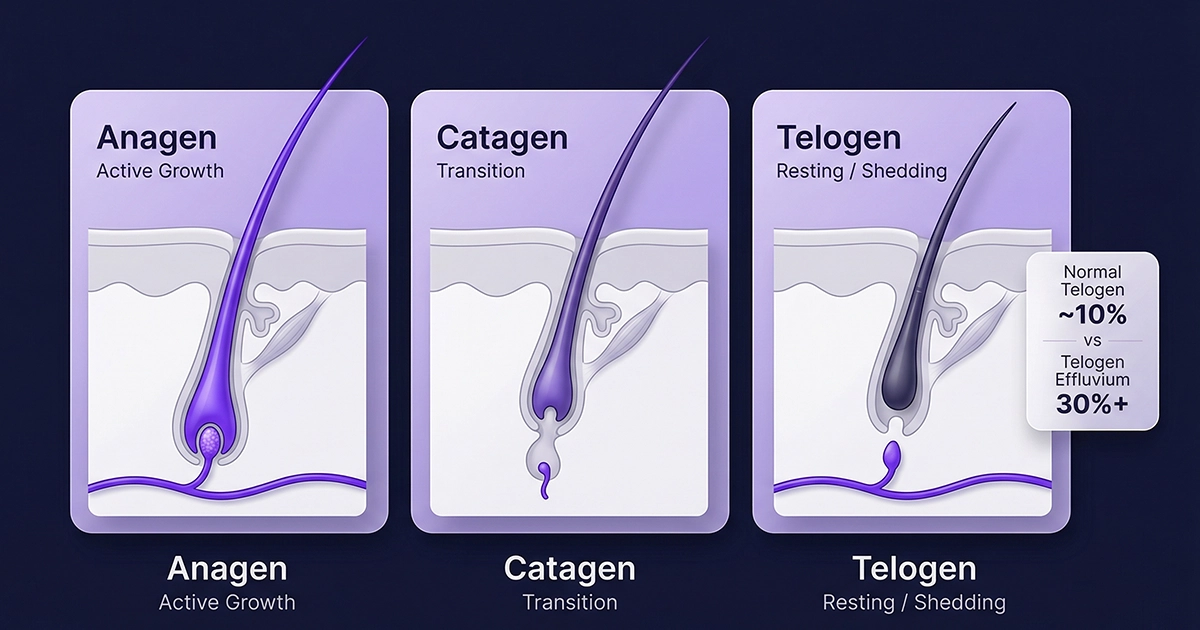
- Anagen phase: This is the active growth phase, where follicles are busy producing hair. It can last for several years, and at any given time, about 85-90% of your scalp hair is in this phase.
- Catagen phase: A short, transitional phase lasting only a few weeks. Hair growth stops as the follicle shrinks and begins to detach from its blood supply.
- Telogen phase: This is the resting phase, which lasts for about 3 to 4 months. The hair (now a "club hair") does not grow but remains in the follicle before it is eventually shed. In telogen effluvium, the proportion of hairs entering this phase can jump from the normal 10% to 30% or more, resulting in noticeable thinning. 9

Which GLP-1 Drugs Report Hair Loss Most Often?
Clinical trial data provides insight into the frequency of hair loss reported by people taking different GLP-1 and dual-agonist medications for weight management. Alopecia is listed as a known adverse reaction for both semaglutide (the active ingredient in Wegovy and Ozempic) and tirzepatide (the active ingredient in Zepbound and Mounjaro). 4, 5
The Data: In major clinical trials for weight management, a small but statistically significant percentage of participants on active medication reported hair loss compared to those on placebo. This reinforces the conclusion that the effect is linked to the compensatory actions of the body as it relates to the drug's efficacy in producing weight loss. For instance, the FDA prescribing information for Zepbound explicitly notes that hair loss was associated with the magnitude of weight reduction. 10
Liraglutide is another GLP-1 medication, found in Saxenda and Victoza. While also effective for weight management, the degree of weight loss is typically less pronounced than that seen with semaglutide and tirzepatide, which may influence the reported rates of side effects like hair loss. 11
| Drug (Active Ingredient) | Indication | % Reporting Hair Loss (Drug) | % Reporting Hair Loss (Placebo) | Source |
|---|---|---|---|---|
| Zepbound (Tirzepatide) | Weight Management | 4.9% - 5.7% (pooled data) | 1.0% - 1.3% | FDA 10 |
| Wegovy (Semaglutide) | Weight Management | 3.0% | 1.0% | FDA 12 |
It's important to note that in the Zepbound clinical trials, hair loss was reported more frequently in female people (7.1%) compared to male people (0.5%) in the treatment group. 10 The reasons for this are not fully understood but could relate to hormonal factors, differences in hair cycle dynamics, or a higher likelihood of noticing and reporting changes in hair density.
4 Ways to Manage Hair Loss on a GLP-1
If you are experiencing hair shedding while taking a GLP-1 medication, there are several proactive steps you can take to manage the issue and support a healthy hair regrowth cycle. The approach focuses on ensuring your body has the nutritional building blocks it needs and minimizing additional stress on your hair follicles.

The Ask your clinician about: The goal is to nourish your body from the inside out and treat your hair gently as it moves through the shedding and regrowth phases.
Address #1: Optimize Your Nutrition.
A caloric deficit is necessary for weight loss, but a nutritional deficit will hinder hair growth. Because GLP-1s reduce appetite, it is crucial to focus on the quality of the calories you consume.
- Prioritize Protein: Hair is made primarily of a protein called keratin. Inadequate protein intake forces the body to ration protein, and hair production is one of the first processes to be shut down. Aim to consume sufficient lean protein at every meal. Examples include chicken, fish, eggs, beans, lentils, tofu, and Greek yogurt. (If you are diabetic, always discuss the right types and amounts of protein intake with your prescriber.)
- Check Key Micronutrients: Rapid weight loss, similar to that after bariatric surgery, is a known risk factor for deficiencies in vitamins and minerals essential for hair health. Focus on iron-rich foods (lean red meat, spinach, lentils), zinc (oysters, nuts, seeds), and vitamin D (fortified milk, fatty fish). Your doctor can check your levels with a simple blood test. 3, 11
- A Note on Biotin: Biotin (Vitamin B7) is widely marketed for hair growth. While a severe deficiency can cause hair loss, this is rare. For most people experiencing telogen effluvium, supplementing with biotin has not been shown to be an effective address unless a true deficiency is diagnosed by a doctor. 1
Address #2: Reduce Physical and Emotional Stress.
Since telogen effluvium is a stress-related condition, managing your body's overall stress load can be beneficial.
- Ensure Adequate Sleep: Aim for 7-9 hours of quality sleep per night. Sleep is when the body performs critical repair functions, including cell regeneration in hair follicles.
- Stay Hydrated: Dehydration can be a side effect of GLP-1s and is a physical stressor. Ensure you are drinking enough water throughout the day to support overall cellular function.
- Incorporate Stress Management: Practices like meditation, deep breathing exercises, or gentle yoga can help manage cortisol levels. Chronic elevation of this stress hormone can negatively impact the hair growth cycle. 8
Address #3: Adopt Gentle Hair Care Practices.
While your hair is in a shedding phase, it's important to treat it with extra care to avoid unnecessary breakage and further loss.
The Caution: Avoid harsh chemical treatments like bleaching, perming, or relaxing. Postpone tight hairstyles like high ponytails, braids, or buns that exert constant pulling force (traction) on the hair roots.
- Use a Wide-Tooth Comb: Gently detangle your hair, especially when it's wet and more fragile. Start from the ends and work your way up to the roots to minimize stress on the follicle.
- Reduce Heat Styling: Minimize the use of blow dryers, curling irons, and flat irons. High heat can damage the hair's protective cuticle, making the shaft weak, brittle, and more prone to breakage, which can worsen the appearance of thinning.
Address #4: Be Patient and Trust the Timeline.
One of the most challenging aspects of telogen effluvium is the waiting period. Remember that this condition is typically temporary.
The Timeline: It takes time for the hair follicles to reset and enter a new anagen (growth) phase. Noticeable regrowth often begins 6 to 12 months after the shedding starts to slow down, as new hairs need time to grow long enough to contribute to overall volume. 2
- Track Your Progress: Taking monthly photos of your hairline or part can help you see subtle signs of regrowth over time, which can be reassuring. Look for fine, new "baby hairs" along your part and hairline.
Coach Claire Tip:
If you're feeling overwhelmed about nutrition, focus on one thing first: protein. Hair is made of it, so not getting enough can slow down regrowth. Try adding a high-quality protein shake or a serving of Greek yogurt to your day. It’s a simple way to give your hair follicles the fundamental building blocks they need to start producing new, healthy strands.
When to See a Doctor About Hair Loss
While hair shedding linked to GLP-1-induced weight loss is usually temporary telogen effluvium, it's essential not to self-diagnose. Hair loss can be a symptom of many different medical conditions, and a proper diagnosis is key to effective treatment. Consulting with your primary care provider or a dermatologist is a critical step. 4
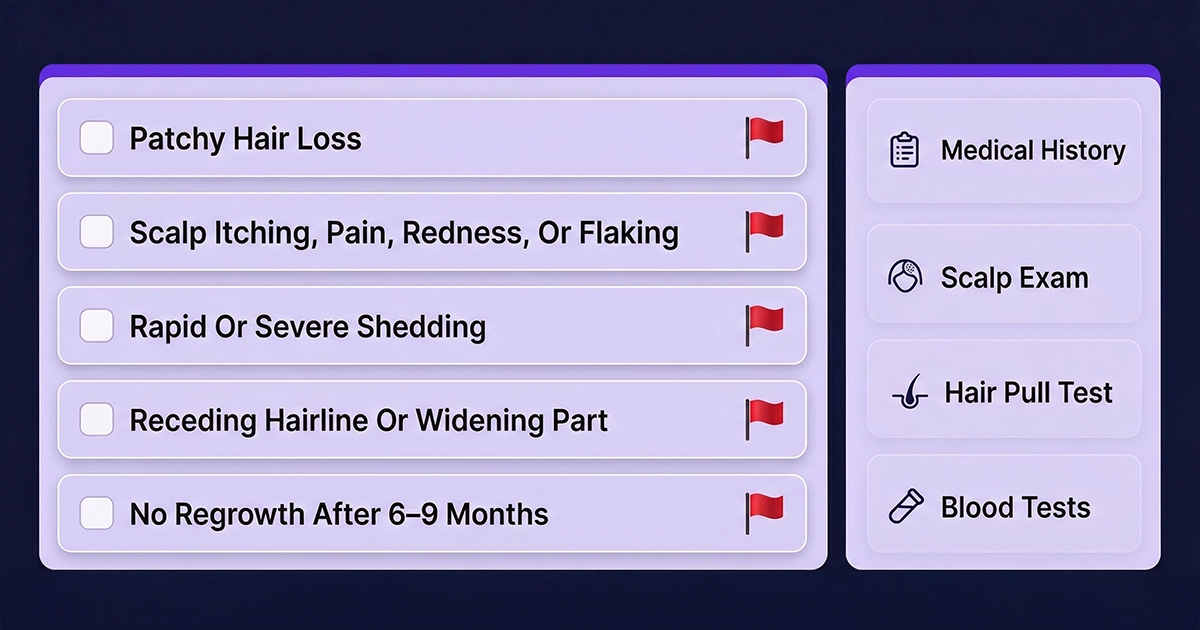
Your doctor can take a full medical history, perform a scalp examination, and may conduct a hair pull test to assess the severity of shedding. They can also order blood tests to check for underlying issues like thyroid disorders, autoimmune markers, or nutritional deficiencies that could be causing or contributing to your hair loss.
The Warning: It is crucial to see a healthcare professional to rule out other causes of alopecia. Your hair loss may not be related to your GLP-1 medication or weight loss at all. An accurate diagnosis is the only way to ensure you are on the right treatment path.
Seek a medical evaluation, particularly if you notice any of the following signs:
- Patchy Hair Loss: Telogen effluvium causes diffuse thinning, not distinct bald patches. Round, smooth patches of hair loss could be a sign of alopecia areata, an autoimmune condition where the body's immune system attacks hair follicles.
- Scalp Itching, Pain, Redness, or Flaking: Inflammatory scalp conditions, such as seborrheic dermatitis or psoriasis, or fungal infections like tinea capitis can cause hair loss and require specific medical treatment.
- Rapid or Abnormally Severe Shedding: If you are losing hair in large clumps or the shedding seems excessive even for telogen effluvium, a prompt evaluation is needed to rule out more aggressive forms of hair loss.
- Receding Hairline or Widening Part (Pattern Loss): If your hair loss is concentrated at the temples or the crown of your head and seems progressive, it could be androgenetic alopecia (female or male pattern hair loss). This condition can coexist with and be unmasked by an episode of telogen effluvium. 4
- No Regrowth: If your shedding has subsided but you see no signs of regrowth after 6-9 months, a dermatologist can help investigate why and discuss further options, which may include topical treatments or other therapies.
Coach Claire's Takeaway
While seeing more hair in your brush can be alarming, remember that hair loss linked to GLP-1s is most often temporary and related to the positive changes you're making for your health. Focus on nourishing your body, be patient with the process, and always keep your healthcare provider in the loop. They are your right partner in navigating your treatment journey.
Frequently Asked Questions
Will my hair grow back after GLP-1 hair loss?
Yes, in the vast majority of cases where hair loss is due to telogen effluvium triggered by weight loss, the hair does grow back. The condition is considered temporary and self-limiting. Once your weight stabilizes and your body adjusts to the changes, the hair shedding should decrease, and follicles will return to their normal growth cycle. Regrowth typically becomes noticeable within 6 to 12 months. 2
Does Ozempic cause more hair loss than Mounjaro or Zepbound?
Both classes of drugs are associated with hair loss as a side effect, and it's primarily linked to the amount and speed of weight loss. 7 However, an individual's experience can vary widely, and the underlying cause for both is typically telogen effluvium.
Should I take hair supplements like biotin to stop the shedding?
Unless you have a confirmed nutritional deficiency, most supplements are unlikely to stop telogen effluvium. The shedding is a physiological process that must run its course. The right approach is to focus on a balanced diet rich in protein, iron, and zinc. 3 Always consult your doctor before starting any new supplements, as they can order bloodwork to see if you have a specific deficiency that needs to be addressed.
How can I tell if my hair loss is from my GLP-1 or something else?
It's impossible to know for sure without a medical evaluation. A key clue is timing: telogen effluvium typically starts 2-4 months after a trigger like starting a GLP-1 and rapid weight loss. 2 However, other conditions like thyroid disorders, anemia, or androgenetic alopecia can also cause hair loss. 4 A dermatologist can perform an examination and tests to determine the correct diagnosis.
Coach Claire's Cheat Sheet
Quick definitions used in this article.
Medical disclaimer: This content is for educational purposes only and is not medical advice, diagnosis, or treatment. Always consult a licensed healthcare professional before starting, stopping, or changing any medication or care plan.
References
- Saleh, D., & Nassereddin, A. (2023). Biotin (Vitamin B7) Deficiency. StatPearls [Internet]. https://www.ncbi.nlm.nih.gov/books/NBK547751/ [top]
- Cleveland Clinic. (2024). Telogen Effluvium. https://my.clevelandclinic.org/health/diseases/24486-telogen-effluvium [top]
- Almohanna, H. M., et al. (2019). The Role of Vitamins and Minerals in Hair Loss: A Review. Dermatology and Therapy, 9(1), 51 - 70. https://pubmed.ncbi.nlm.nih.gov/30547302/ [top]
- Brenner, F. M., & Oldoni, C. (2019). Telogen effluvium x female pattern hair loss: is there correlation? Anais Brasileiros de Dermatologia, 94(4), 486 - 487. https://pubmed.ncbi.nlm.nih.gov/31644631/ [top]
- Rojas Lopez, R. F., et al. (2025). Alopecia as an Emerging Adverse Effect Associated With Glucagon-Like Peptide-1 (GLP-1) Receptor Agonists for Weight Loss: A Scoping Review. Cureus. https://pubmed.ncbi.nlm.nih.gov/40951222/ [top]
- Cohen-Kurzrock, R. A., & Cohen, P. R. (2021). Bariatric Surgery-Induced Telogen Effluvium (Bar SITE): Case Report and a Review of Hair Loss Following Weight Loss Surgery. Cureus, 13(4), e14617. https://pubmed.ncbi.nlm.nih.gov/34055500/ [top]
- Alsuwailem, O. A., et al. (2025). Hair Loss Associated With Glucagon-Like Peptide-1 (GLP-1) Receptor Agonist Use: A Systematic Review. Cureus. https://pubmed.ncbi.nlm.nih.gov/41111833/ [top]
- Asghar, F., et al. (2020). Telogen Effluvium: A Review of the Literature. Cureus. https://pubmed.ncbi.nlm.nih.gov/32607303/ [top]
- Chhabra, N., & Rahim, J. S. (2024). Hair Root Dermoscopy from Shed Hair: A Simple Diagnostic Tool in Telogen Effluvium. International Journal of Trichology. https://pubmed.ncbi.nlm.nih.gov/40309376/ [top]
- U.S. Food and Drug Administration. (2024). ZEPBOUND (tirzepatide) Injection, for subcutaneous use. https://www.accessdata.fda.gov/drugsatfda_docs/label/2024/217806s013lbl.pdf [top]
- Wilding, J. P. H., et al. (2021). Once-Weekly Semaglutide in Adults with Overweight or Obesity. The New England Journal of Medicine, 384(11), 989 - 1002. https://www.nejm.org/doi/full/10.1056/NEJMoa2032183 [top]
- U.S. Food and Drug Administration. (2025). WEGOVY (semaglutide) injection, for subcutaneous use. https://www.accessdata.fda.gov/drugsatfda_docs/label/2025/215256s024lbl.pdf [top]