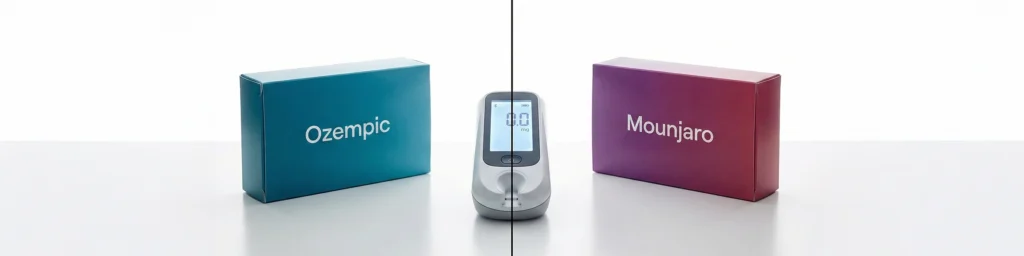
GLP-1 medication comparison


THE BOTTOM LINE
- The Weight Loss Winner: Across major obesity and diabetes trials, tirzepatide has produced greater average weight loss than semaglutide, with top-end results around 20.9% in SURMOUNT-1 and 14.9% with semaglutide 2.4 mg in STEP 1 45.
- The Mechanism: Ozempic works through GLP-1 signaling, while Mounjaro activates both the GLP-1 and GIP receptors. That dual-receptor action is associated with stronger glucose-dependent insulin secretion and broader metabolic effects 26.
- The Switch: A direct dose-for-dose swap is not supported. Practical switching guidance for weekly incretin injections uses the next scheduled weekly treatment planning point, while Mounjaro still starts at its labeled 2.5 mg initiation dose 17.
- The Cost: Official pricing pages still place both products near or above $1,000 at list price, and coverage depends heavily on plan rules, prior authorization, and savings eligibility 3910.
What This Comparison Review Covers
- How Ozempic And Mounjaro Differ Mechanistically
- What Weight-Loss Differences The Evidence Suggests
- How Side Effects And Tolerability Can Diverge
- Which Access, Cost, And Coverage Questions Matter In Real Use
The Verdict Which Drug Helps Lose More Weight?
Clinical trial data shows Mounjaro (tirzepatide) leads to greater weight loss than Ozempic (semaglutide). This superior potency requires careful dose increases to manage side effects.
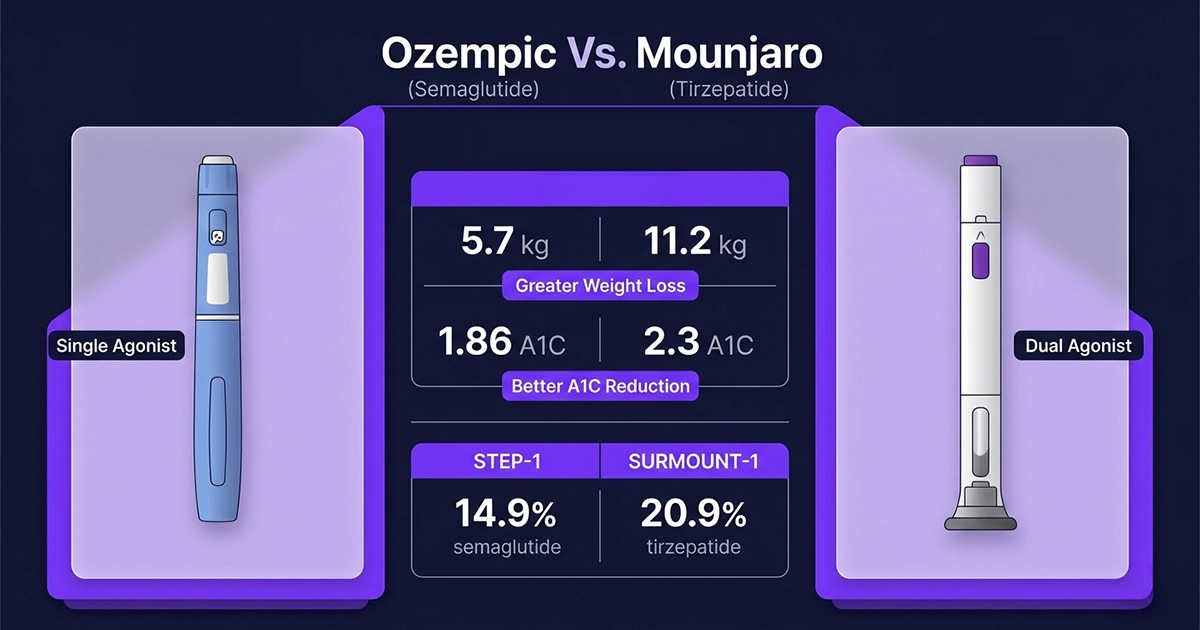
The SURPASS-2 clinical trial directly compared the two drugs in people with type 2 diabetes and found greater weight-loss and A1C reductions with tirzepatide than with semaglutide 1 mg 1.
The Head-to-Head Numbers (In Type-2 Diabetics)
The 40-week SURPASS-2 trial compared 1 mg of semaglutide (the active ingredient in Ozempic) against three different doses of tirzepatide (Mounjaro). In that study, tirzepatide produced larger reductions in body weight and A1C than semaglutide 1 mg 1:
- Ozempic (1 mg): Participants lost an average of 5.7 kg (approx. 12.5 lbs) over the 40-week trial 1.
- Mounjaro (15 mg): Participants lost an average of 11.2 kg (approx. 24.7 lbs) over the same period 1.
- A1C Reduction: The 15 mg dose of tirzepatide reduced A1C by a mean of 2.3 percentage points, compared with 1.86 percentage points for semaglutide 1 mg 1.
At the highest studied dose, tirzepatide produced nearly double the average weight loss of semaglutide 1 mg in this diabetes trial. Even the lowest 5 mg tirzepatide dose produced more weight loss than semaglutide 1 mg 1.
The "Obesity-Only" Comparison
For people using these drugs primarily for weight management, the STEP-1 (semaglutide) and SURMOUNT-1 (tirzepatide) trials offer the right comparison:
Start Quiz
Find your best GLP-1 match
What should compare prioritize first?
Comparing medications next?
Compare GLP-1 providers
Coach Claire says:
"Is Mounjaro just a 'stronger' version of Ozempic?"
While both medications are related, Mounjaro is not just a more potent version of Ozempic. It's a chemically distinct drug that works on an additional hormonal pathway.
This guide compares their weight-loss results, side-effect patterns, and the dose-escalation issues to review with a clinician if a switch is being considered 145.
Coach Claire Tip: If side effects flare during a dose increase, ask whether staying longer at the current dose is reasonable before escalating. Both labels use gradual titration because gastrointestinal symptoms are most common during escalation 12.
How They Work The "Dual Agonist" Difference
Mounjaro's stronger trial results are linked in part to the biological pathways it targets. Ozempic acts on a single GLP-1 pathway, while tirzepatide activates both GIP and GLP-1 receptors 26.
Ozempic The Single Agonist (GLP-1)
Ozempic is a GLP-1 receptor agonist, meaning it mimics the hormone Glucagon-like peptide-1 (GLP-1) 2. This hormone is naturally released by the gut after eating and has three main functions:
- Stimulates Insulin: Signals the pancreas to release insulin in a glucose-dependent manner, helping move sugar from the blood into cells.
- Slower Gastric Emptying: Delays the rate at which food leaves the stomach, increasing the sensation of physical fullness and prolonging satiety.
- Brain Signaling: GLP-1 signaling is also linked to lower food intake and appetite regulation 1.
Ozempic is highly effective but limited to activating only the GLP-1 pathway.
Mounjaro The Dual Agonist (GLP-1 + GIP)
Mounjaro is a dual GIP/GLP-1 receptor agonist, while Ozempic targets GLP-1 alone 6. Like GLP-1, GIP is an incretin hormone released after meals.
- The Synergy: By activating both GIP and GLP-1 receptors, tirzepatide enhances glucose-dependent insulin secretion and has produced stronger glycemic and weight-loss effects than GLP-1-only therapy in trials 6.
- The Result: In the cited reviews and label language, tirzepatide's dual-receptor activity is associated with lower glucose levels, lower food intake, and lower body weight in treated patients 16.
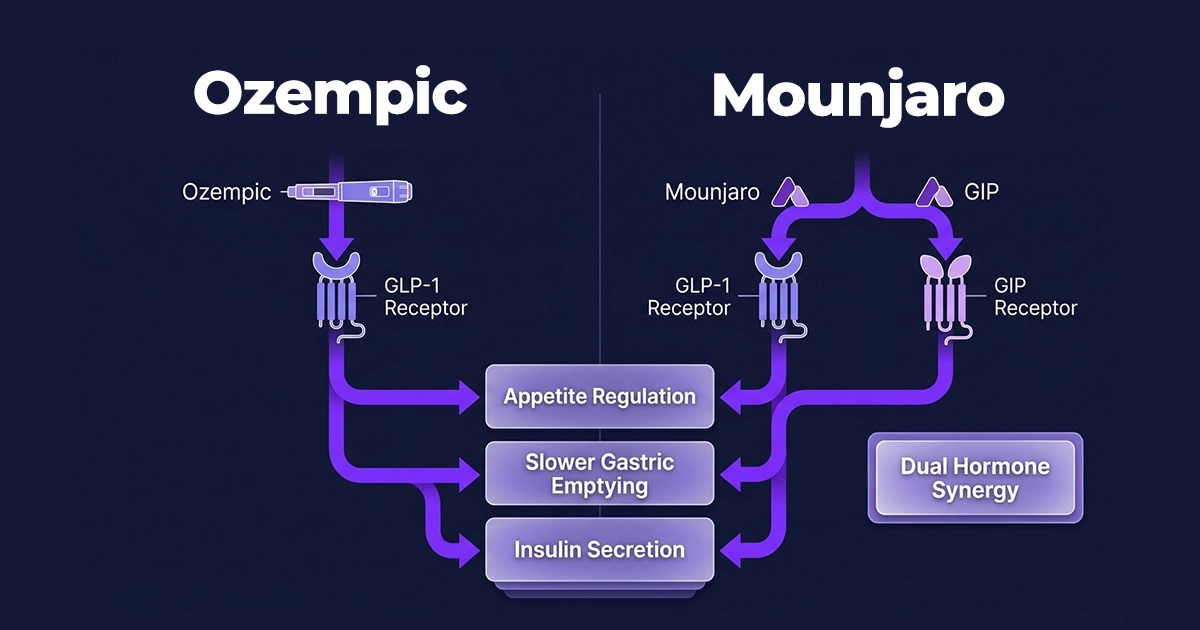
This dual-receptor activity is one reason tirzepatide has drawn attention as a more potent option for both glucose lowering and weight loss 26.
Side Effects Is Mounjaro Harsher?
Both labels place gastrointestinal symptoms at the center of tolerability monitoring, and both products require extra attention during dose escalation 12.
The Nausea and GI Split
The FDA labels describe gastrointestinal symptoms as the most common adverse effects for both products, especially during dose escalation 12:
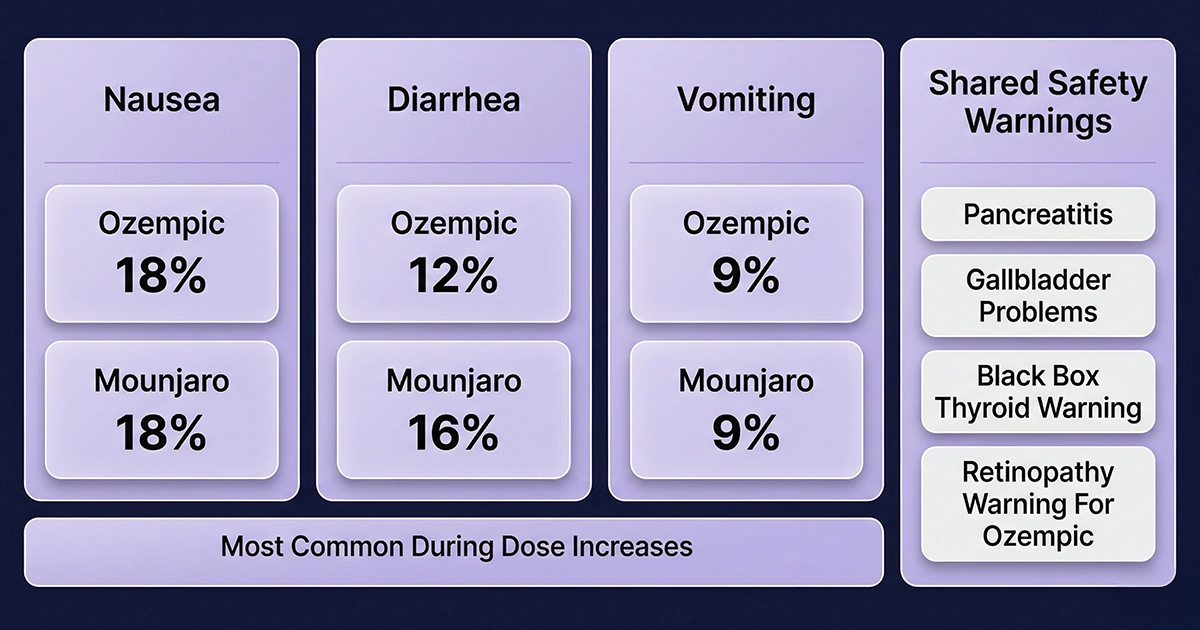
- Ozempic common GI reactions: In placebo-controlled trials, nausea occurred in 15.8% to 20.3%, vomiting in 5.0% to 9.2%, and diarrhea in 8.5% to 8.8% of Ozempic-treated patients, depending on dose 2.
- Mounjaro common GI reactions: The label lists nausea, diarrhea, decreased appetite, vomiting, constipation, dyspepsia, and abdominal pain as the most common adverse reactions, and notes that severe gastrointestinal reactions can occur 1.
These label summaries are not a direct head-to-head comparison, but they support the broader point that both medications commonly cause gastrointestinal symptoms and that escalation phases need careful monitoring 12.
If nausea, vomiting, or diarrhea become hard to tolerate, patients should contact the prescribing clinician before escalating further and should watch for dehydration from ongoing gastrointestinal symptoms 12.
Serious Safety Warnings
Both medications carry FDA warnings for rare but serious adverse events.
- Pancreatitis: Both drug labels warn of potential acute inflammation of the pancreas. people should stop the medication and seek immediate medical attention if they experience severe abdominal pain that may radiate to the back 12.
- Gallbladder Problems: Both labels warn about gallbladder disease, and gallbladder-related events were reported in semaglutide and tirzepatide studies 12.
- Diabetic Retinopathy: The Ozempic label includes a specific warning about complications of diabetic retinopathy, as rapid improvement in glucose control can sometimes temporarily worsen this condition 2.
Safety: The Thyroid Warning (Black Box)
Both Ozempic and Mounjaro carry an FDA "boxed warning" - the most serious type - regarding thyroid C-cell tumors found in rodent studies.
The Rule: Do not take these medications if you have a personal or family history of Medullary Thyroid Carcinoma (MTC) or an endocrine condition called Multiple Endocrine Neoplasia syndrome type 2 (MEN 2) 12.
Treatment Planning Schedules and Administration
Both are once-weekly injections, but their pen devices, storage, and dose-escalation schedules differ.
The Pen Hardware and Storage
- Ozempic: Uses a multi-dose, dial-a-dose pen. You attach a new needle for each injection and dial to select your prescribed dose. Storage: Once in use, an Ozempic pen can be kept at room temperature or refrigerated for up to 56 days 2.
- Mounjaro: Uses a single-dose auto-injector pen. The needle is pre-attached and hidden. You unlock the pen, press it against the skin, and hold a button to start the automatic injection. Storage: Mounjaro pens are for one-time use and should be refrigerated. They can be kept at room temperature for up to 21 days if needed 1.
- As with any injectable medication, do not throw needles out in regular trash. Ask your provider for instruction on the proper disposal method.
Titration Timeline
Both drugs use stepwise titration schedules with at least four weeks at each dose level before escalation. In both labels, that initiation schedule is used to reduce gastrointestinal adverse reactions 12.
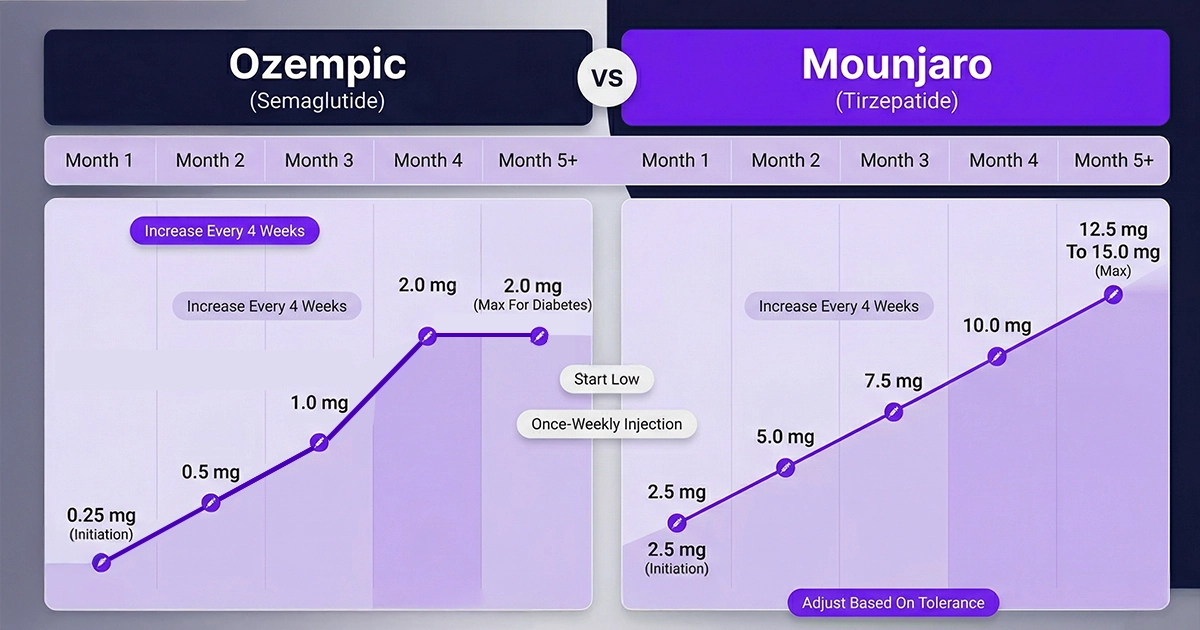
| Phase | Ozempic (Semaglutide) Dose | Mounjaro (Tirzepatide) Dose |
|---|---|---|
| Month 1 | 0.25 mg (Initiation) | 2.5 mg (Initiation) |
| Month 2 | 0.5 mg | 5.0 mg |
| Month 3 | 1.0 mg | 7.5 mg |
| Month 4 | 2.0 mg (Max for Diabetes) | 10.0 mg |
| Month 5+ | -- | 12.5 mg to 15.0 mg (Max) |
Note: This reflects the standard titration schedules per FDA labels 12. A doctor may keep a patient on a lower dose if it is well-tolerated and effective.
Injection Sites
Both medications are injected subcutaneously (under the skin) into the abdomen, thigh, or upper arm, and both labels instruct patients to rotate injection sites 12.
Switching Care plan discussion Can You Change Meds?
You can switch from Ozempic to Mounjaro, but it is not a direct, dose-for-dose swap.

Switching should be handled as a new tirzepatide initiation, not as a dose-for-dose conversion from semaglutide. Mounjaro's labeled starting dose is 2.5 mg once weekly, and practical switching guidance for weekly incretin agents starts the replacement on the next weekly treatment planning point rather than at an equivalent "high dose" 17.
The "Reset" Rule
The standard medical care plan discussion is to restart at the lowest initiation dose.
- Finish your last pen: Take the final dose of your current medication as scheduled.
- Use the next weekly treatment planning point: Practical guidance for switching between once-weekly incretin injections starts the new weekly agent 1 week after the last dose of the current one, on the same day of the week 7.
- Start Low: Administer the 2.5 mg starting dose of Mounjaro. Even if you were on the highest dose of Ozempic, you must begin at Mounjaro's entry-level dose.
- Titrate Up: Follow the standard Mounjaro dose-escalation schedule, spending at least four weeks at each level before increasing 1.
Cost, Insurance, and Availability
Cost and coverage rules remain major access barriers for many people.
Price Comparison (Cash Pay)
Official manufacturer pricing pages still place both products near or above $1,000 at list price. NovoCare lists Ozempic at $1,027.51 per package, and Lilly's Connecticut disclosure sheet lists Mounjaro at $1,079.77 for a four-pen carton; actual out-of-pocket cost can still vary by insurance, pharmacy charges, and savings eligibility 910.
Prior Authorization and Coverage Rules
Insurance coverage is not promised. The clearest documented barrier in the current source set is prior authorization:
- Prior Authorization (PA): The AMA defines prior authorization as a health-plan cost-control process that requires advance review before a service may be eligible for payment coverage, and it notes that the process can delay treatment 3.
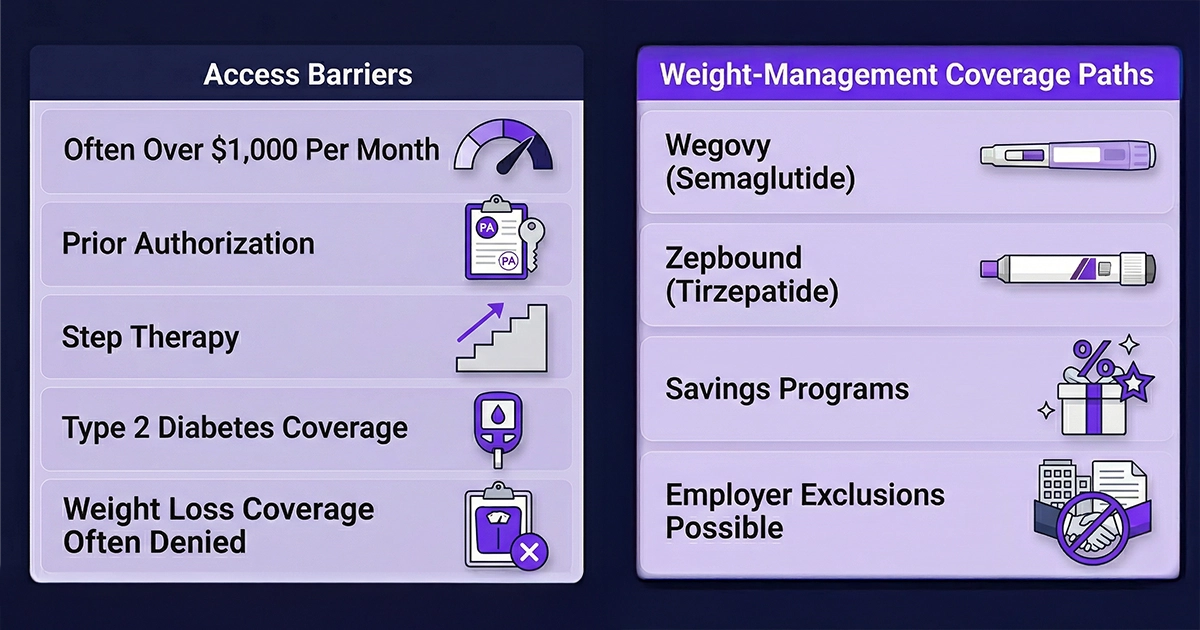
Because Ozempic and Mounjaro are labeled for type 2 diabetes, access questions often depend on whether the prescription fits a plan's coverage rules and prior-authorization process 123.
Frequently Asked Questions
Which drug works faster?
Neither label frames this as a first-dose race. Both products use gradual dose escalation over several weeks before patients reach the higher maintenance doses used in the main comparison data 12.
Can I take both at the same time?
The cited FDA labels do not provide a combined Ozempic-plus-Mounjaro regimen. Both products carry overlapping gastrointestinal, pancreatitis, gallbladder, and dehydration-related warnings, so any transition should follow a prescriber's switch plan instead of overlapping weekly doses 127.
Is Mounjaro better for diabetics?
For glycemic control, the SURPASS-2 data in the Mounjaro label showed greater A1C reduction with tirzepatide than with semaglutide 1 mg. Ozempic's label also includes a cardiovascular-risk reduction indication in adults with type 2 diabetes and established cardiovascular disease 12.
What happens if I stop taking them?
In the STEP 1 extension, people who stopped semaglutide regained a substantial portion of the weight they had lost over the following year 8.
Coach Claire's Takeaway
Ozempic and Mounjaro both work, but they are not interchangeable dose-for-dose. Tirzepatide has produced greater average weight loss in major trials, while both drugs still require slow titration, monitoring for gastrointestinal side effects, and realistic coverage planning 123457910.
Coach Claire's Cheat Sheet
Quick definitions used in this article.
Medical disclaimer: This content is for educational purposes only and is not medical advice, diagnosis, or treatment. Always consult a licensed healthcare professional before starting, stopping, or changing any medication or care plan.
References
- FDA. (2025). Mounjaro (tirzepatide) Prescribing Information. U.S. Food and Drug Administration. [top]
- FDA. (2025). Ozempic (semaglutide) Prescribing Information. U.S. Food and Drug Administration. [top]
- American Medical Association. (2024). What is prior authorization?. AMA-assn.org. [top]
- Kushner RF, Calanna S, Davies M, et al. (2022). Semaglutide for the Treatment of Obesity. Trends in Cardiovascular Medicine. [top]
- Mueller TD, Blueher M, Tschoep MH, DiMarchi RD. (2022). Clinical perspectives on the use of the GIP/GLP-1 receptor agonist tirzepatide for the treatment of type-2 diabetes and obesity. Diabetologia. [top]
- Madsbad S. (2023). Tirzepatide: A New Generation Therapeutic for Diabetes Type 2. Annals of Medicine and Surgery. [top]
- Almandoz JP, Lingvay I, Morales J, Campos C. (2020). Switching Between Glucagon-Like Peptide-1 Receptor Agonists: Rationale and Practical Guidance. Clinical Diabetes. [top]
- Rubino D, Abrahamsson N, Davies M, et al. (2022). Weight regain and cardiometabolic effects after withdrawal of semaglutide: The STEP 1 trial extension. Diabetes, Obesity and Metabolism. [top]
- NovoCare. (2026). Ozempic (semaglutide) injection List Price & Insurance Coverage Explained. Novo Nordisk. [top]
- Lilly USA, LLC. (2025). Information for Connecticut Prescribers of Prescription Drugs: Mounjaro (tirzepatide). pricinginfo.lilly.com. [top]