
What Is Food Noise?


THE BOTTOM LINE
- What it is: "Food noise" describes constant, intrusive thoughts about food that are unrelated to physical hunger. It is a form of hedonic hunger - a drive to eat for pleasure, not for energy needs 1.
- The Biology: Food noise stems from the brain's reward system. This is not a personal failing but a biological process where the VTA-Nucleus Accumbens circuit and the chemical dopamine create powerful cravings by assigning excessive importance (aberrant salience) to certain foods 2.
- Associated Conditions: Persistent food noise is linked with obesity, binge eating disorder (BED), and metabolic issues like insulin resistance. The constant cravings can be both a symptom and a driver of these conditions 3, 4.
- How GLP-1s Help: Medications like semaglutide and tirzepatide quiet food noise by acting on appetite-control centers in the brain, like the hypothalamus. This increases feelings of fullness and reduces the reward value of food 3.
- Other Strategies: Non-medication approaches are also effective. These include Cognitive Behavioral Therapy (CBT) to reframe thought patterns and nutritional strategies like high-protein diets to enhance natural satiety signals 9, 10.
What This Medical Review Covers
- What Food Noise Usually Feels Like In Daily Life
- How Food Noise Differs From Normal Hunger
- Why GLP-1 Treatment Can Quiet Those Signals
- When Ongoing Symptoms Deserve Clinical Follow-Up
What Does Food Noise Feel Like?
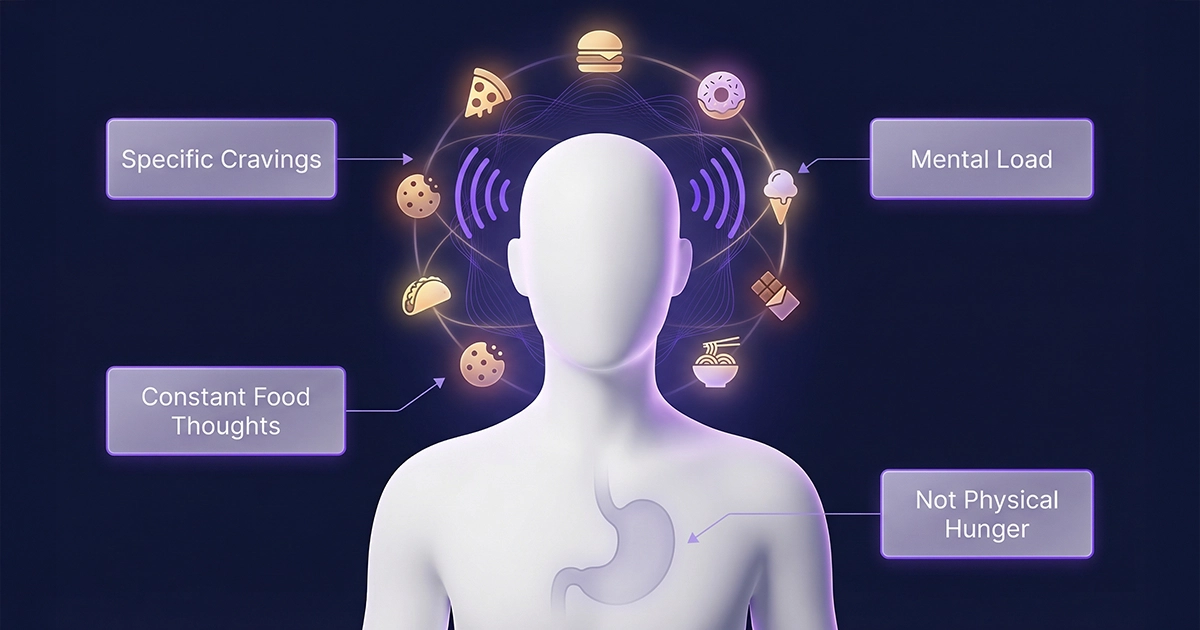
Food noise describes a preoccupation with food that is distinct from homeostatic hunger - the body's physiological need for energy. Instead, food noise is a form of hedonic hunger, the drive to eat for pleasure and reward, even when the body has no energy deficit 1. This drive can feel all-consuming and disconnected from physical needs.
This constant internal negotiation creates a significant cognitive load, draining mental energy and leaving you mentally preoccupied with food, from planning meals and fighting urges to ruminating on past indulgences. People experiencing severe food noise often describe it as a "mental radio" stuck on a food channel. This exhausting internal monologue can interfere with daily life and mental well-being.
| Feature | Homeostatic Hunger (Physical) | Hedonic Hunger (Food Noise) |
|---|---|---|
| Triggers | Depleting energy stores, empty stomach, hormones like ghrelin. | External cues (seeing/smelling food), stress, emotions, habit. |
| Sensation | Builds gradually. Felt in the stomach (growling, emptiness). | Sudden and urgent. Felt in the head as a specific craving. |
| Food Type | Open to a variety of foods that will provide energy. | Desire for a specific, highly palatable food (e.g., salty, sweet). |
| Resolution | Satisfied by eating a meal; leads to a feeling of fullness. | Often not satisfied by eating; can lead to more cravings or guilt. |
Start Quiz
Find your best GLP-1 match
What kind of path do you want to explore first?
Ready to compare options?
Compare GLP-1 providers
Coach Claire says:
Do you find yourself thinking about your next meal, even when you've just finished eating? Or maybe you constantly negotiate with yourself over a snack you aren't physically hungry for.
This persistent, intrusive chatter is what many call "food noise." It's more than a passing craving; it's like a radio is always on in your head, playing a station dedicated entirely to food. It's a real biological experience rooted in the complex wiring of our brains, not a lack of willpower.
The Science Behind Food Noise Why It's Not Your Fault
The relentless nature of food noise isn't a failure of character; it is deeply rooted in neurobiology. The brain's reward system, a complex network of pathways essential for reinforcing life-sustaining behaviors like eating, is at the core of this phenomenon 2. This system uses the neurotransmitter dopamine to create sensations of pleasure and motivation, but it can become dysregulated, particularly in the modern food environment.
The modern food environment, filled with hyper-palatable foods engineered for maximum flavor, can hijack this system 4. This dysregulation is partly driven by what neuroscientists call "reward prediction error." When a food is more rewarding than expected, dopamine reinforces the cues associated with it, training the brain to seek them out with increasing intensity.
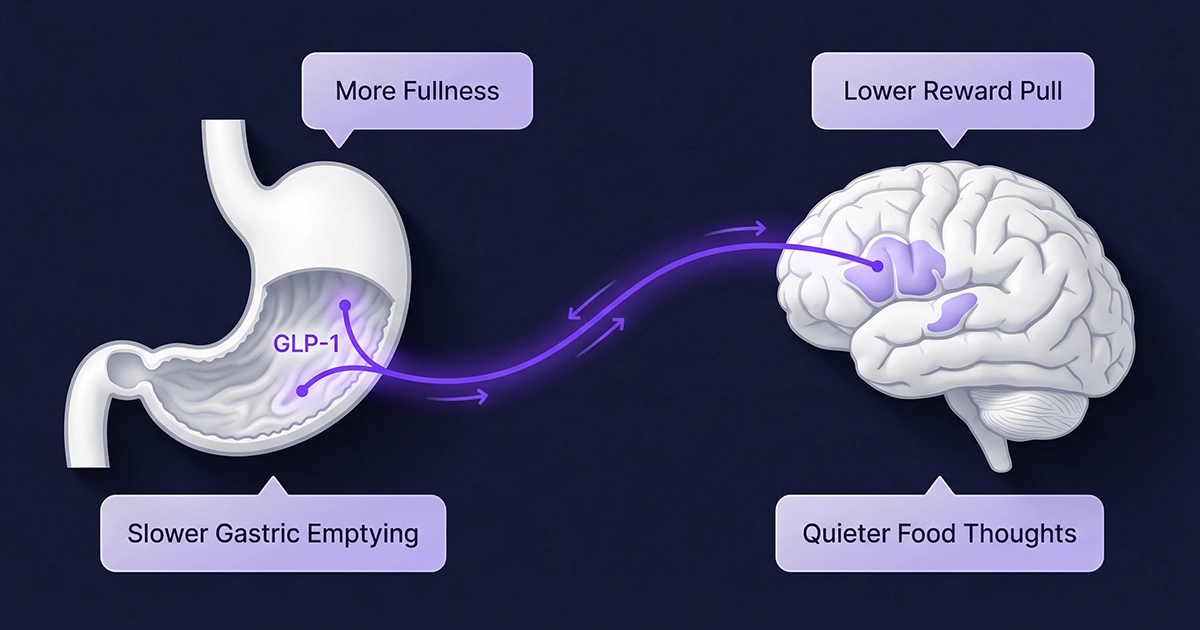
- The Reward Pathway: The VTA-Nucleus Accumbens pathway is a key circuit in this system. When we eat highly palatable foods, the Ventral Tegmental Area (VTA) releases a surge of dopamine into the Nucleus Accumbens. This creates a powerful sense of pleasure and reinforcement that trains the brain to "want" the food again and again 2.
- Aberrant Salience: Over time, repeated exposure to hyper-palatable foods can cause the brain to assign them excessive importance - a state known as aberrant salience. Cues related to these foods trigger a powerful, dopamine-driven craving that feels intensely important and difficult to ignore 2.
- The Role of the Prefrontal Cortex: The Prefrontal Cortex (PFC) is the brain's executive control center, responsible for functions like decision-making and impulse control. It attempts to regulate the powerful "wanting" urges generated by the reward pathway. Food noise often represents a significant conflict where this primal, dopamine-driven signal overpowers the rational, top-down control of the prefrontal cortex 5.
The Caution: This powerful biological drive evolved to ensure survival in an environment of food scarcity. In the modern world, this same system can contribute to compulsive eating behaviors that feel impossible to control through willpower alone.
Medical Conditions Linked to Food Noise
Persistent food noise can be both a symptom and a contributor to several medical conditions, often reflecting underlying metabolic health. Addressing the root medical issue can reduce food noise, and quieted food noise can, in turn, make it easier to adhere to lifestyle changes.
| Condition | Link to Food Noise |
|---|---|
| Obesity | Individuals with obesity may have altered dopamine signaling, increasing reward sensitivity to food and driving compulsive eating 5. This can create a vicious cycle where food noise contributes to weight gain, and the metabolic changes associated with excess body weight further intensify the food noise. |
| Binge Eating Disorder (BED) | Food noise is a core component of BED, representing the intense cravings and obsessive thoughts that precede and surround a binge episode. BED is a formal psychiatric diagnosis characterized by recurrent episodes of binge eating accompanied by a distressing sense of loss of control 1. |
| Insulin Resistance & Type 2 Diabetes | Insulin resistance, a hallmark of prediabetes and type 2 diabetes, can lead to volatile blood sugar fluctuations that the body may interpret as an urgent need for energy, triggering intense cravings and food noise. Many medications used to treat type 2 diabetes, such as GLP-1 agonists, also effectively reduce food noise by improving metabolic function and directly acting on the brain's appetite centers 3. |
| Polycystic Ovary Syndrome (PCOS) | PCOS is a hormonal disorder often associated with insulin resistance. Many women with PCOS report significant food noise and intense cravings, particularly for carbohydrates, which is likely linked to the underlying metabolic dysregulation that disrupts normal appetite signaling 6. |
Coach Claire Tip:
How can you tell if it's real hunger or just food noise? Ask yourself: "Would I eat an apple or a plain piece of chicken right now?" If the answer is yes, you're likely experiencing homeostatic (physical) hunger.
If you only want a specific food, like cookies or chips, and would turn down a healthier option, that's a strong sign of hedonic hunger, or food noise.
How GLP-1 Medications Quiet Food Noise
For years, people struggling with food noise were told to use more willpower. Today, a class of medications known as glucagon-like peptide-1 (GLP-1) receptor agonists has provided a biological solution. Drugs like semaglutide (in Ozempic and Wegovy) and tirzepatide (in Mounjaro and Zepbound) have a profound effect on quieting food noise 2, 6.
Initially developed to manage blood sugar in type 2 diabetes, their powerful effect on appetite regulation and weight loss also revealed a profound impact on the brain's control of food-seeking behavior 3. These medications work by mimicking the natural GLP-1 hormone, which the body releases after a meal to help regulate appetite and blood sugar. The drugs bind to and activate GLP-1 receptors, including those located directly in the brain's appetite-control centers 7.
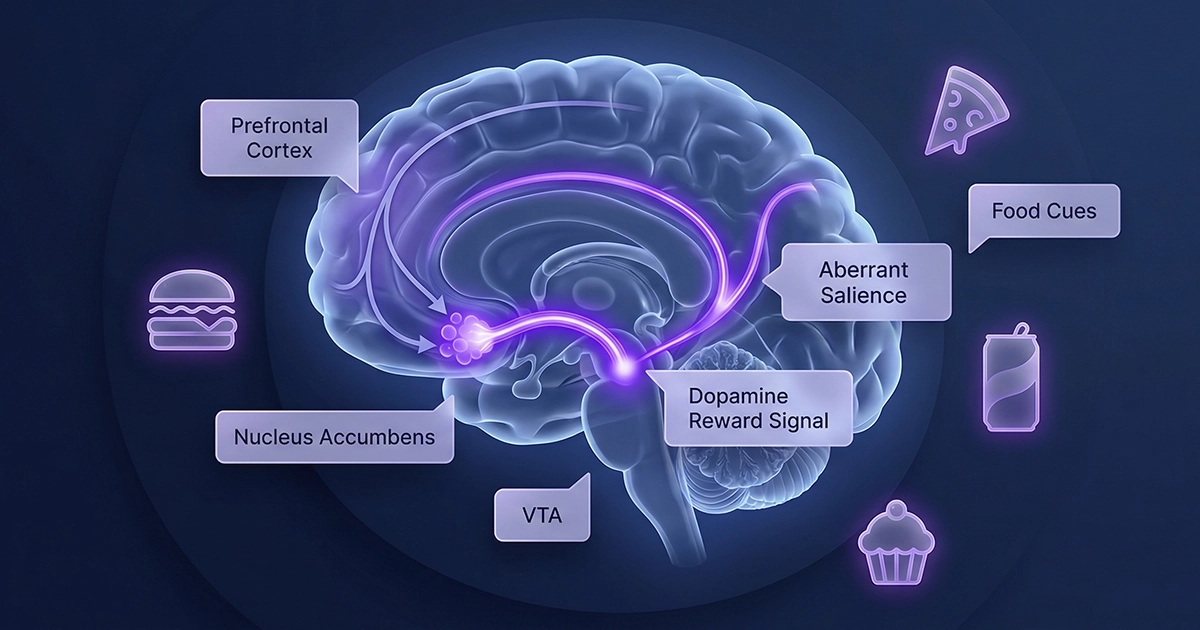
The Fix: GLP-1 agonists cross the blood-brain barrier and bind to receptors in the brain, particularly in the hypothalamus and hindbrain. This action turns down the volume on food noise by enhancing the body's natural satiety systems.
- Increasing Satiety Signals: GLP-1 agonists act on the hypothalamus, the brain's center for energy regulation. They amplify feelings of fullness, making you feel satisfied with smaller amounts of food and for longer periods after eating 3.
- Reducing Food's "Reward" Value: These medications also influence the brain's reward circuitry. They appear to dampen the dopamine response associated with eating highly palatable foods. The food is still enjoyable, but the compulsive "must-have" drive is significantly reduced 7.
- Slowing Digestion: In addition to their brain effects, GLP-1 agonists slow gastric emptying. Food stays in the stomach longer, contributing to a prolonged feeling of physical fullness that reinforces the brain's satiety signals sent to the brain 3.
The result for many people is a sense of relief and "food freedom." The constant mental negotiation diminishes, allowing them to make food choices based on physical hunger rather than overwhelming cravings. This newfound control can dramatically improve quality of life.
Safety and Side Effects of GLP-1 Treatment
While GLP-1 receptor agonists are effective, they are prescription medications with potential side effects. The most common side effects are gastrointestinal, often occurring when starting the medication or increasing the dose.
To manage these side effects, healthcare providers use a dose-escalation strategy. Treatment begins at a very low dose and is gradually increased over several weeks or months. This slow titration approach allows the gastrointestinal system to adapt to the medication, which can significantly mitigate the severity of nausea, vomiting, and other common symptoms, thereby improving treatment tolerability and adherence 8.
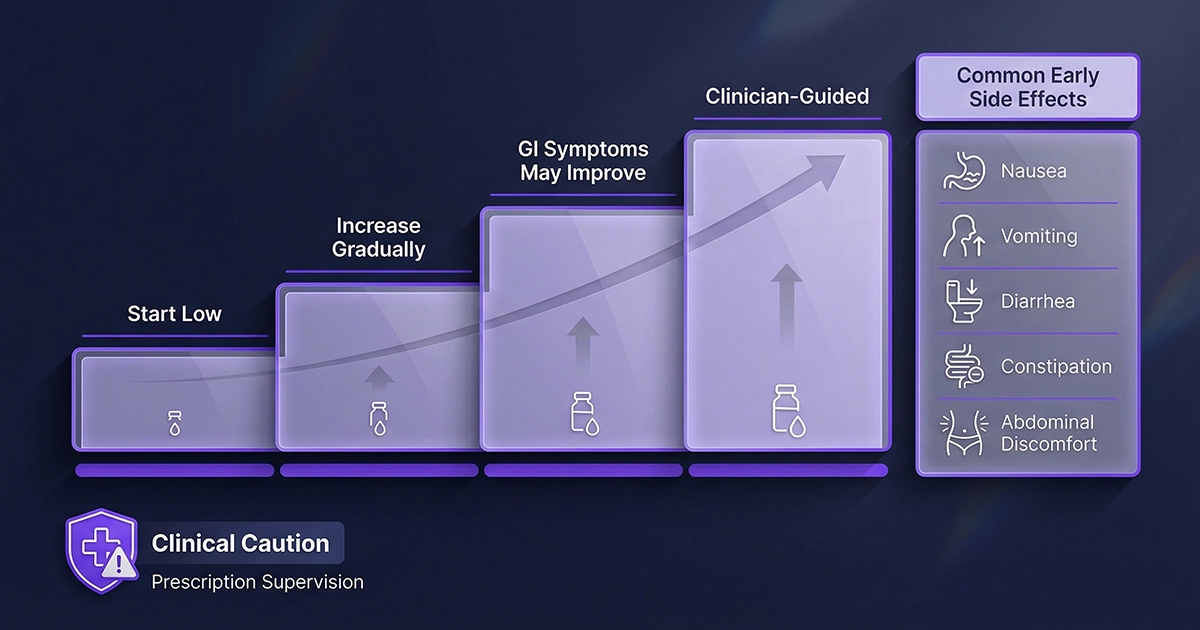
The Warning - Common Side Effects: Many users experience nausea, diarrhea, vomiting, constipation, and abdominal pain. These effects are typically mild to moderate in severity and often decrease as the body adjusts to the medication over time 8.
The Warning - Serious Side Effects: Though less common, more serious risks exist, including pancreatitis (inflammation of the pancreas), gallbladder problems (like gallstones), acute kidney injury, and increased heart rate. It is crucial to discuss severe or persistent symptoms with a healthcare provider immediately.
Black Box Warning: GLP-1 receptor agonists, including semaglutide and tirzepatide, have a boxed warning from the FDA regarding a risk of thyroid C-cell tumors. In rodent studies, these drugs caused thyroid tumors. While it is unknown if they cause such tumors in humans, they are contraindicated for people with a personal or family history of medullary thyroid carcinoma (MTC) or Multiple Endocrine Neoplasia syndrome type 2 (MEN 2) 8.
Starting a GLP-1 medication should be a decision made with a healthcare professional who can review your history and monitor treatment.
Other Ways to Manage Food Noise
Medication is not the only path to managing food noise. Several evidence-based strategies can help by addressing the behavioral and psychological components of cravings. These strategies work by strengthening impulse control, increasing awareness of hunger cues, and addressing underlying triggers.
| Strategy | Mechanism |
|---|---|
| Cognitive Behavioral Therapy (CBT) | A well-established form of psychotherapy that helps people identify and reframe destructive thought patterns. With a therapist, you learn to recognize the specific triggers for your cravings and develop alternative, healthier coping responses that do not involve food 9. |
| Mindfulness-Based Eating (MB-EAT) | This practice uses mindfulness meditation techniques to help you become more attuned to the body's internal hunger and satiety cues. It teaches you to slow down and notice the difference between physical hunger and emotional or craving-driven urges to eat. |
| High-Protein Diets | Nutritional strategies can significantly impact satiety. Diets higher in protein have been shown to increase the release of satiety hormones and decrease the hunger hormone ghrelin, leading to greater feelings of fullness and reduced cravings throughout the day 10. Protein-rich foods like eggs, Greek yogurt, fish, tofu, and beans may help interrupt cue-driven snack cycles. Many also contain tyrosine, the amino acid used to make dopamine, but the evidence there is mechanistic and indirect rather than proof that tyrosine-rich foods directly treat food noise 10, 12. |
| Stress & Sleep Management | Chronic stress and inadequate sleep disrupt key appetite-regulating hormones. High cortisol from stress and low leptin from poor sleep can increase the hunger hormone ghrelin, which can significantly amplify food noise 11. Therefore, practices like meditation, regular exercise, and maintaining consistent sleep hygiene are foundational for managing cravings. |
Coach Claire's Takeaway
Food noise is a real biological phenomenon, not a personal failing. Understanding this science is the first step toward finding the right strategies - from medication to lifestyle changes - to quiet the noise and regain control. Always work with your healthcare provider to create a plan that's right for you.
Frequently Asked Questions
What is the difference between food noise and an eating disorder?
Food noise describes the constant, intrusive thoughts about food. It is a symptom that can be part of an eating disorder like Binge Eating Disorder (BED), but it can also exist on its own. An eating disorder is a formal psychiatric diagnosis with specific criteria related to behaviors and distress. Severe food noise warrants a discussion with a healthcare provider to rule out an underlying eating disorder 1.
Can you have food noise without being overweight?
Yes. While strongly associated with obesity, food noise can affect individuals of any body weight. It is fundamentally about the brain's relationship with food reward, not necessarily body size.
Do GLP-1 medications eliminate food noise completely?
For many people, GLP-1s dramatically reduce or even eliminate food noise. However, the effect can vary. Some people may still experience occasional cravings, but they are typically far less intense and easier to manage. The goal is to reduce the noise to a manageable level, not necessarily achieve total silence.
Coach Claire's Cheat Sheet
Quick definitions used in this article.
Medical disclaimer: This content is for educational purposes only and is not medical advice, diagnosis, or treatment. Always consult a licensed healthcare professional before starting, stopping, or changing any medication or care plan.
References
- Lowe, M. R., & Butryn, M. L. (2007). Hedonic hunger: a new dimension of appetite?. Physiology & Behavior, 91(4), 413-421. [top]
- Volkow, N. D., Wang, G. J., & Baler, R. D. (2011). Reward, dopamine and the control of food intake: implications for obesity. Trends in Cognitive Sciences, 15(1), 37-46. [top]
- Aldawsari, M., et al. (2023). The Efficacy of GLP-1 Analogues on Appetite Parameters, Gastric Emptying, Food Preference and Taste Among Adults with Obesity: Systematic Review of Randomized Controlled Trials. Diabetes, Metabolic Syndrome and Obesity: Targets and Therapy, 16, 851-861. [top]
- Hall, K. D., et al. (2019). Ultra-Processed Diets Cause Excess Calorie Intake and Weight Gain: An Inpatient Randomized Controlled Trial of Ad Libitum Food Intake. Cell Metabolism, 30(1), 67-77.e3. [top]
- Leigh, S. J., & Morris, M. J. (2018). The role of reward circuitry and food addiction in the obesity epidemic: An update. Biological Psychology, 131, 31-42. [top]
- Cetik, S., Acikgoz, A., & Yildiz, B. O. (2022). Investigation of taste function and eating behavior in women with polycystic ovary syndrome. Appetite, 168, 105726. [top]
- Farr, O. M., et al. (2016). GLP-1 receptors exist in the parietal cortex, hypothalamus and medulla of human brains and the GLP-1 analogue liraglutide alters brain activity related to highly desirable food cues in individuals with diabetes: a crossover, randomised, placebo-controlled trial. Diabetologia, 59(5), 954-965. [top]
- U.S. Food and Drug Administration. (2025). Wegovy (semaglutide) injection Prescribing Information. FDA. [top]
- Dalle Grave, R., Sartirana, M., & El Ghoch, M. (2017). Personalized multistep cognitive behavioral therapy for obesity. Diabetes, Metabolic Syndrome and Obesity: Targets and Therapy, 10, 305-313. [top]
- Blom, W. A. M., Lluch, A., Stafleu, A., et al. (2006). Effect of a high-protein breakfast on the postprandial ghrelin response. The American Journal of Clinical Nutrition, 83(2), 211-220. [top]
- Chaput, J. P., McHill, A. W., Cox, R. C., Broussard, J. L., Dutil, C., & da Costa, B. G. G. (2023). The role of insufficient sleep and circadian misalignment in obesity. Nature Reviews Endocrinology, 19(2), 82-97. [top]
- Wurtman, R. J., Wurtman, J. J., Regan, M. M., McDermott, J. M., Tsay, R. H., & Breu, J. J. (2003). Effects of normal meals rich in carbohydrates or proteins on plasma tryptophan and tyrosine ratios. The American Journal of Clinical Nutrition, 77(1), 128-132. [top]