
Last reviewed: • FindMyGLP1 Editorial
How to Get a GLP-1 Prescription Navigating Insurance, Telehealth, and the "Name Game"
Short answer: To get a GLP-1 prescription, you generally need a BMI of 30+ (or 27+ with a comorbidity), a licensed prescriber, and insurance coverage. If insurance denies coverage, many patients use telehealth to access lower-cost compounded GLP-1s as a "Plan B."
| Molecule | FDA-Approved for Diabetes | FDA-Approved for Weight Loss | Low-Cost "Plan B" |
|---|---|---|---|
| Semaglutide | Ozempic® | Wegovy® | Compounded Semaglutide |
| Tirzepatide | Mounjaro® | Zepbound® | Compounded Tirzepatide |
| Liraglutide | Victoza® | Saxenda® | Compounded Liraglutide |
Who actually qualifies?
Before you book an appointment, it is critical to check the medical criteria. FDA-approved GLP-1s like Wegovy and Zepbound generally require:
- BMI ≥ 30 (Classified as Obesity) OR
- BMI ≥ 27 (Overweight) plus at least one weight-related condition (e.g., hypertension, type 2 diabetes, high cholesterol).1
Note: "Wanting to lose 10 pounds" is not a medical indication. Reputable doctors will require recent lab work and a medical history to verify safety.
The Science: Proving "Medical Necessity"
To get approved, you often need to speak the language of "medical necessity." Insurance companies don't care about cosmetic weight loss; they care about health outcomes. Being familiar with the major clinical trials can help you and your doctor make a stronger case.
The Semaglutide Argument (Wegovy/Ozempic)
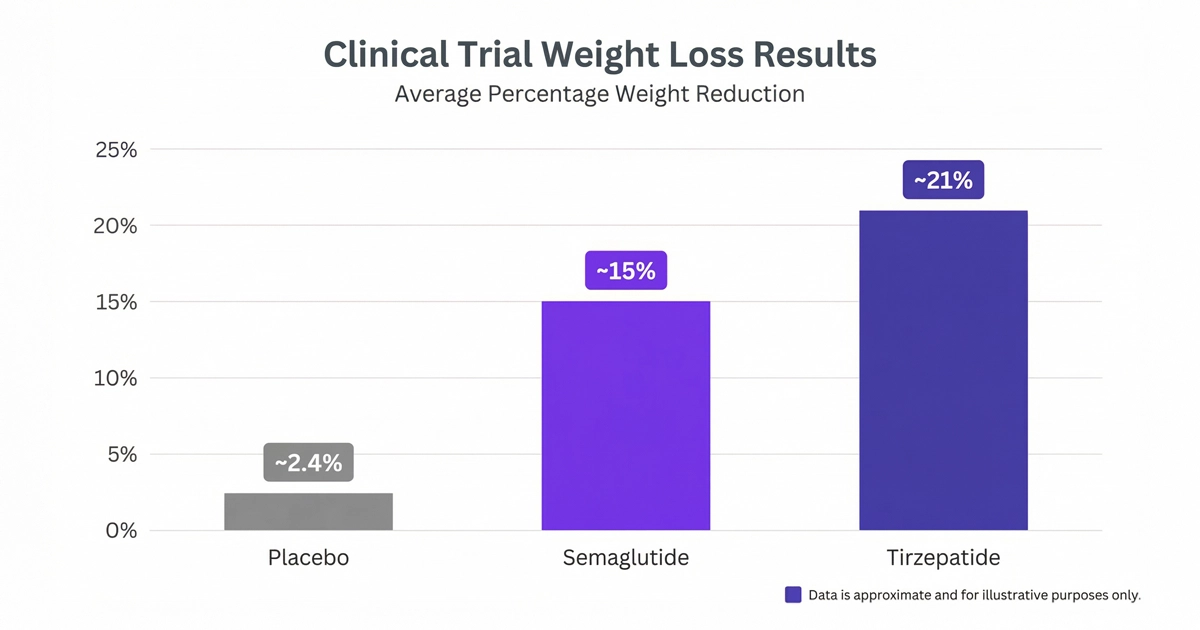
The STEP-1 Trial was the landmark study that proved the efficacy of semaglutide 2.4 mg (Wegovy). In this 68-week study, adults with obesity (without diabetes) achieved an average weight loss of 14.9%, compared to just 2.4% in the placebo group.4
Your Talking Point: "This isn't just about weight. It is about achieving a 15% reduction in body mass to lower my risk of cardiovascular events, as shown in the STEP trials."
The Tirzepatide Argument (Zepbound/Mounjaro)
Tirzepatide is a "dual agonist" (targeting both GLP-1 and GIP receptors). The SURMOUNT-1 Trial showed even more potent results. At the highest dose (15 mg), participants achieved an average weight loss of 20.9% over 72 weeks.5
Your Talking Point: "Given my BMI, the 21% efficacy demonstrated in SURMOUNT-1 suggests Tirzepatide is medically necessary to bring me out of the 'Obesity' hazard range."
The 3 Paths to a Prescription
1. The Primary Care Provider (PCP)
Best for: Patients with excellent PPO insurance and a long-standing doctor relationship.
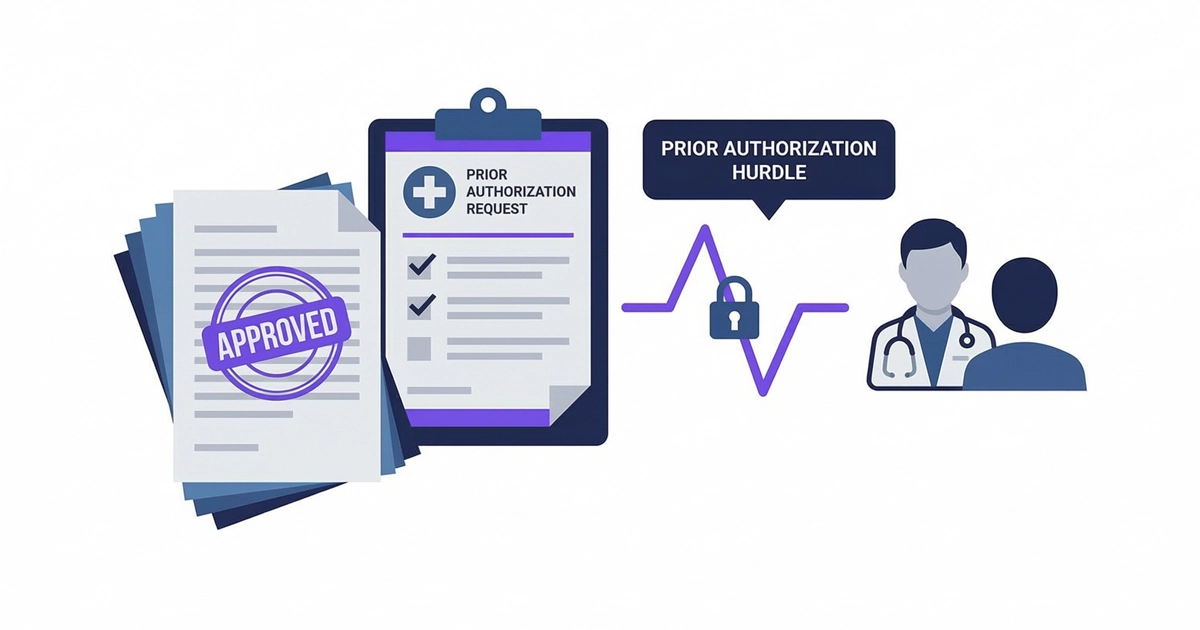
The Reality: Many PCPs are hesitant to prescribe GLP-1s due to the administrative burden of "Prior Authorizations" (the extensive paperwork required by insurance). Even if they write the script, they may not have the dedicated staff to fight an insurance denial.
2. The Specialist (Endocrinologist)
Best for: Patients with complex metabolic issues or Type 2 Diabetes.
The Reality: Endocrinologists are the experts, but waitlists can be 3–6 months long. They typically focus on diabetes management (Ozempic/Mounjaro) rather than pure weight loss (Wegovy/Zepbound), though this is changing.
3. Telehealth & Online Clinics
Best for: Speed, convenience, and access to "Plan B" (Compounded) options.
The Reality: Online platforms specialize in handling the paperwork. They often offer two distinct tracks:
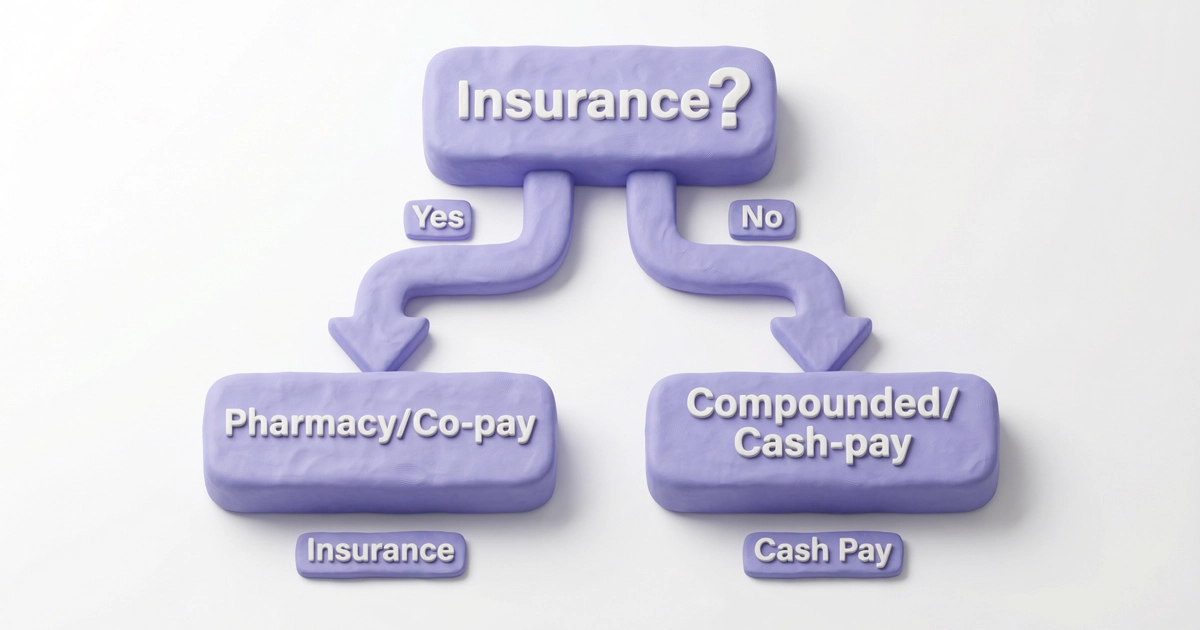
- Insurance Track: Services like Ro, Hims, or Sequence that fight for name-brand coverage (visit fees apply, medication cost depends on insurance).
- Cash-Pay Track: If insurance denies you, they offer compounded medications shipped directly to your door.
Navigating Insurance: The "Prior Auth" Battle
Getting the prescription is only half the battle; getting your insurance to pay for it is the other. The monthly cost of name-brand GLP-1s can exceed $1,000 without coverage.2
- The Prior Authorization (PA): Your doctor must prove "medical necessity" to your insurer.
- Step Therapy: Insurers often require you to "fail" cheaper drugs (like phentermine or metformin) before they cover a GLP-1.
- The Formulary Check: Does your plan cover "Anti-Obesity Medications" (AOMs)? Many employer plans exclude them entirely, covering Ozempic (diabetes) but denying Wegovy (weight loss).
The Appeal Letter Blueprint
If your Prior Authorization (PA) is denied, do not give up. Denials are often automated. A well-crafted appeal letter can reverse the decision if you provide the right evidence.
What to include in your appeal
- The "Step Therapy" History: List every diet, program (e.g., WeightWatchers, Noom), and medication you have tried and failed in the past. Insurers want proof that cheaper methods didn't work.
- Comorbidities: Explicitly list "High Blood Pressure," "High Cholesterol," or "Sleep Apnea." Link these directly to your obesity diagnosis.
- Continuity of Care: If you were already on a GLP-1 (perhaps via a sample or a different plan), argue that stopping now would cause "rebound weight gain" and harm your health.
The "Plan B": Compounded GLP-1s
When insurance coverage is denied or the cash price of name-brand drugs ($1,000+/mo) is out of reach, many patients turn to compounded medications. This is the "Cash-Pay" route.
Medical Fact Check: "Generic" vs. Compounded
Common Question: "Where can I buy generic Ozempic?"
Medical Reality: There is no FDA-approved generic version of semaglutide or tirzepatide yet. "Compounded" GLP-1s are made in specialized pharmacies. They are allowed by federal law during drug shortages, but they are not FDA-approved generics.3
Safety Check: 503A vs. 503B Pharmacies
Not all compounding pharmacies are the same. If you choose this route, you must know where your medication is made.
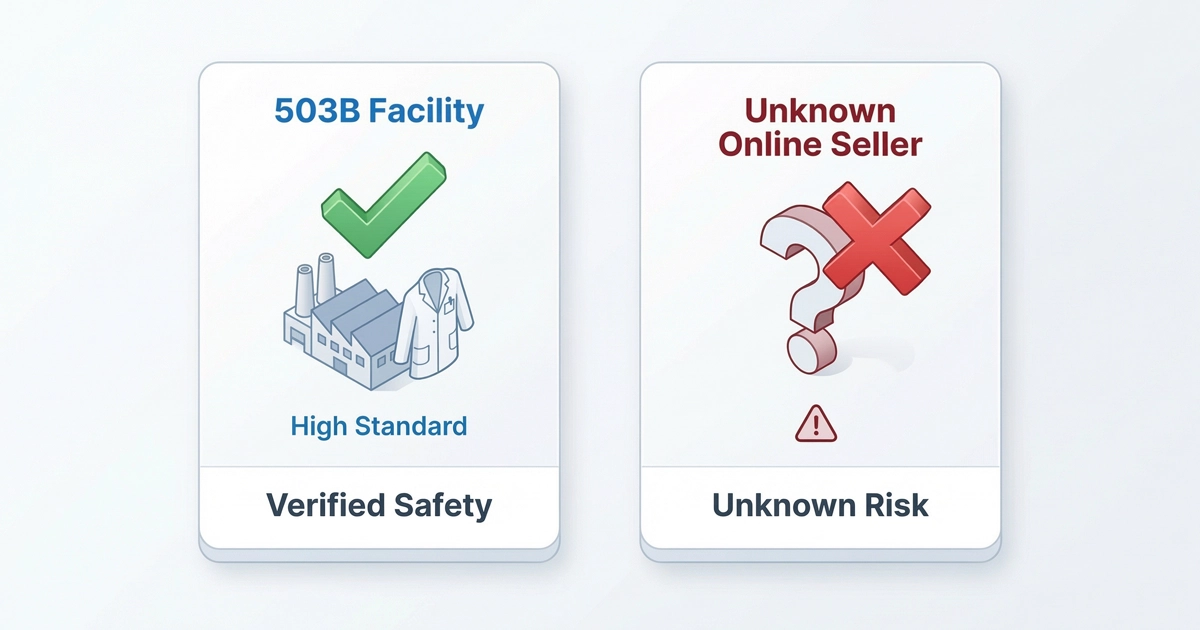
- 503B Outsourcing Facilities: These are held to higher regulatory standards (cGMP) similar to pharmaceutical manufacturers. They make large batches for hospitals and clinics. This is the "Gold Standard" for safety.
- 503A Pharmacies: These are traditional compounding pharmacies that make patient-specific prescriptions. They are regulated by state boards, not the FDA's direct cGMP standards.
The Verdict: Whenever possible, choose a provider that partners with 503B facilities or highly accredited 503A pharmacies (look for PCAB accreditation) to prioritize sterility and safety.
Cost Comparison (Insurance vs. Compound)
Note: Membership fees shown. Insurance co-pays and deductibles vary by plan.
Note: Median price from tracked providers. No insurance needed.
Pricing method: Composite average from live offers; see details below.
Common Questions
Can I ask my doctor for Ozempic specifically?
You can, but if you do not have Type 2 Diabetes, they should prescribe Wegovy (the same drug, labeled for weight loss). Asking for Ozempic for weight loss is considered "off-label" and is rarely covered by insurance.
Does telehealth take insurance?
Most telehealth platforms accept insurance for the consultation (visit fee) and will try to use your insurance for the medication. However, if your insurance denies the drug, you are responsible for the cost (often $1,000+ retail or $200–$400 for compounded).
Is compounded semaglutide safe?
Compounded medications are not FDA-approved generics. The FDA recommends using them only when the brand-name drug is in shortage. Ensure your provider uses a state-licensed 503A or 503B pharmacy.3
References
- FDA. Wegovy (semaglutide) Prescribing Information. View source
- KFF. Prices of Drugs for Weight Loss in the US and Other Countries. View source
- FDA. Medications Containing Semaglutide Marketed for Type 2 Diabetes or Weight Loss. View source
- Wilding JPH, et al. Once-Weekly Semaglutide in Adults with Overweight or Obesity. N Engl J Med. 2021;384:989-1002. View source
- Jastreboff AM, et al. Tirzepatide Once Weekly for the Treatment of Obesity. N Engl J Med. 2022;387:205-216. View source