
Last reviewed: • FindMyGLP1 Editorial
What is Food Noise? The Neurobiology of Aberrant Salience and Cravings
Short answer: Food noise is a persistent, intrusive mental preoccupation with eating caused by "aberrant salience" in the brain's reward centers.1 It is a biological signaling error where the brain assigns survival-level urgency to food cues, rather than a failure of willpower or character.1
Verified by The Editor ✓
- The Biological Cause: Dysregulation in the VTA-Nucleus Accumbens circuit (the reward loop).2
- The Sensation: A constant "mental radio" that plans, bargains, and obsesses about food even after eating.
- The Solution: Compounded semaglutide and compounded tirzepatide restore satiety signaling to effectively quiet the brain.3
Safety first: Common effects include nausea and GI upset. Serious risks include pancreatitis and gallbladder issues; review labels and talk to your clinician.1
Defining the "Mental Radio"
For most people, hunger is homeostatic: a physical signal from the stomach to energy-seeking signals in the brain. Once energy needs are met, the signal ceases. However, for those experiencing food noise, hunger is hedonic and unrelenting—described by patients as a "background radio" that refuses to turn off. This metabolic mismatch occurs when the brain incorrectly assigns survival-level importance to mundane food cues, a state medically known as aberrant salience.1
In community research, patients describe this as a "constant negotiation" with themselves. It involves planning the next meal while still consuming the current one, intense mental bargaining over "allowable" caloric intake, and a persistent visual fixation on food cues in the environment. This is not a failure of discipline; it is a biological state where the reward centers of the brain have the "volume" turned up to an unsustainable level, effectively drowning out the Prefrontal Cortex's ability to exert executive control.1
Cost to Quiet the Noise
Note: Median pricing based on live offers from the Dec 17 CSV.
Note: Median pricing based on live offers from the Dec 17 CSV.
Pricing method: Composite median from current offers; updated 2025-12-23.
The Neuroscience: Why Your Brain Won't Shut Up
In brains with high food noise, the reward center—specifically the Ventral Tegmental Area (VTA) and the Nucleus Accumbens—becomes hyper-reactive.1, 2 This hyper-reactivity leads to aberrant salience, where the brain is constantly scanning for and assigning value to food, regardless of its actual energy needs or satiety state.
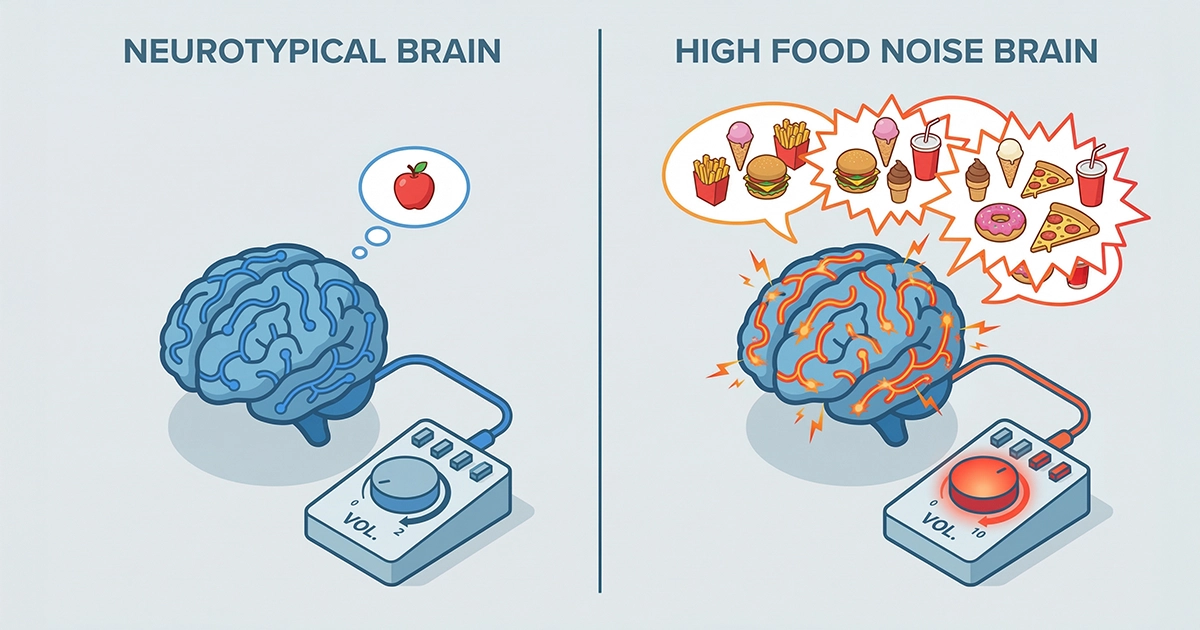
The neurobiology of food noise involves a complex interplay between the hindbrain and the forebrain. The Nucleus Accumbens is responsible for "wanting" (incentive salience), while the Ventral Tegmental Area (VTA) releases dopamine in response to food cues.1 In a balanced system, the Prefrontal Cortex (PFC) acts as a brake pedal, allowing an individual to ignore these signals. However, in individuals with high food noise, the reward signals are so powerful that they override the PFC's executive control.2
Measuring the Noise: The CoEQ
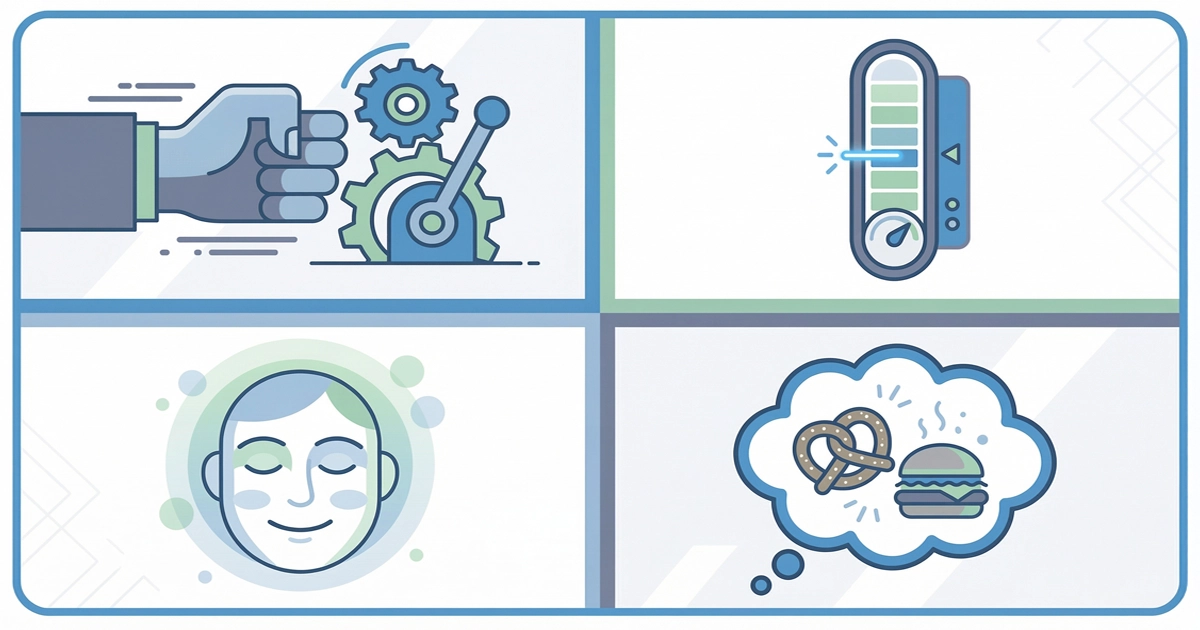
Clinicians use the Control of Eating Questionnaire (CoEQ) to measure the severity of this preoccupation.4 The CoEQ allows researchers to quantify what was previously considered a subjective "willpower" issue into four distinct clinical domains: craving control, craving strength, savory vs. sweet preference, and the impact on positive mood.4
Natural Remedies vs. Medical Reality
Medical Fact Check
Common Question: Can Berberine or "Oatzempic" silence the noise?
Medical Reality: No.5 While fiber (oats) supports gut health and Berberine activates metabolic pathways like AMPK, they lack the molecular potency to cross the blood-brain barrier and bind to central reward receptors in the brain.5 They may provide minor homeostatic support but do not address the hedonic "noise" at the source.
Safe Alternative: Consult a clinician about compounded semaglutide or compounded tirzepatide, which target the central GLP-1 receptors responsible for aberrant salience.
How Compounded GLP-1s Silence the Static
Compounded semaglutide and compounded tirzepatide act as receptor-level "shields" in the brain. By binding to GLP-1 receptors in the Area Postrema (the brain's chemical sensor) and the Nucleus Accumbens, these molecules amplify the signal of fullness while simultaneously dampening the reward of eating.6 Tirzepatide adds a second mechanism by targeting GIP receptors, further stabilizing the "volume dial" of hunger.6
The Maintenance Gap: Will the Noise Return?
Food noise is a biological trait, not a temporary condition.1 Research suggests that if GLP-1 medications are discontinued, underlying "aberrant salience" signaling typically returns to its previous baseline within weeks as the medication clears the system.3 Long-term management often requires a maintenance strategy to keep the reward pathways regulated.
Is "Food Noise" an official clinical diagnosis?
Not officially. It is a patient-reported symptom medically recognized as "aberrant salience"—a biological signaling error regarding food preoccupation.1
What is the difference between food noise and physical hunger?
Physical hunger is homeostatic, signaling a physical need for energy that resolves after eating; food noise is hedonic, originating in the brain's reward circuitry, and persists even when caloric needs are met.
How quickly do compounded GLP-1s silence food noise?
Most patients report a quiting effect within 24 to 72 hours of their first dose as medication reaches the Area Postrema and dampens hyper-reactive reward signaling.
Can I "willpower" my way through food noise without medication?
Because food noise is rooted in a biological signaling error where the brain assigns survival-level urgency to food, willpower is often insufficient to address the underlying receptor-level dysregulation.
Will the noise return if I stop taking the medication?
Evidence suggests that reward signaling typically returns to its previous baseline once the medication is cleared from the system, as the underlying biological traits remain.3
References
- Brown RM, et al. Dopamine and the nucleus accumbens in obesity. J Neuroendocrinol. 2023. View Source
- Volkow ND, et al. Reward, dopamine and control of food intake. Int J Obes. 2011. View Nature Article
- Wilding JPH, et al. Once-Weekly Semaglutide (STEP 1). NEJM. 2021. View NEJM Study
- Dalton M, et al. The Control of Eating Questionnaire (CoEQ). Appetite. 2015. View CoEQ Research
- NIH. Berberine Fact Sheet. 2024. View NIH Source
- Garvey WT, et al. Tirzepatide once weekly (SURMOUNT-2). Lancet. 2023. View Lancet Study