


What this page helps you sort
This page should calm readers without minimizing legitimate risk. GLP-1 side effects are predominantly gastrointestinal, dose-dependent, and usually transient, so most Week 1 problems are part of adaptation, not proof that something has gone wrong. The most common pattern is nausea, fullness, bloating, constipation, diarrhea, fatigue, early food aversion, and sulfur burps as gastric emptying slows and the body adjusts. But symptom triage matters. Severe pain that radiates to the back, hard abdominal distension, low urine output with dehydration, or symptoms that do not fit a normal dose-escalation pattern need faster clinical review. Start here, then move into the deeper guide on side effects, hair loss, or pen-use safety risks.
Start with the common nausea pattern before you assume something rarer is happening.
Nausea is usually worst while the dose is being increased, not after a stable maintenance pattern is in place. Stomach issues are common early on, but the practical job is separating normal nuisance from medical emergency. Start with smaller meals, lower-fat foods, steady hydration, and slower eating habits that help the body adapt. Constipation and diarrhea often swing with diet and hydration, and delayed gastric emptying can also drive sulfur burps. The escalation point is pain. Green-signal reflux can often be treated at home, but sharp right-sided pain, low urine output, or pain that bores through to the back should not be treated like a routine adjustment question. If symptoms feel severe, persistent, or paired with dehydration, stop assuming this is normal titration discomfort.
Read the side-effects guideHair shedding is usually an indirect stress signal, not follicle damage from the drug.
When hair loss shows up during GLP-1 treatment, the usual culprit is telogen effluvium: a temporary shedding phase triggered by rapid weight loss, lower intake, nutrient gaps, or other physiologic stress. It typically starts a couple of months after the trigger, not the same week the medication begins. That timing matters, because it helps separate a common indirect effect from the fear that the medication is directly damaging hair follicles. Use this guide when the question is whether shedding fits the typical timeline, what nutrition issues to check, and when it is time to ask a clinician to rule out another cause.
Read the hair-loss guideImprovised pen use can create sterility and dose-accuracy problems.
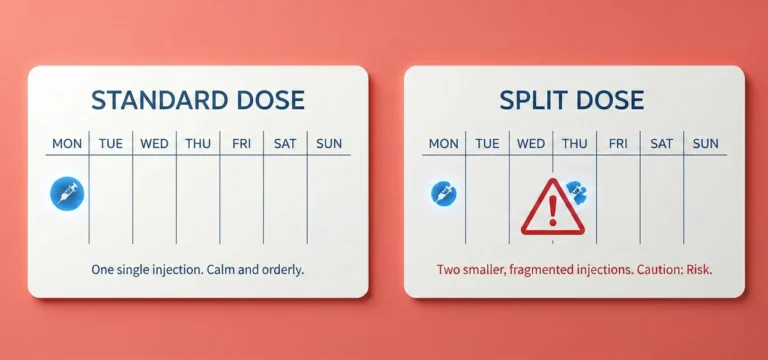
Trying to stretch or divide an Ozempic pen at home may sound like a practical workaround for nausea or hunger, but it creates sterility, dose-accuracy, and handling problems the pen was never built to solve. Repeated punctures can increase contamination risk, and using a pen beyond its preservative window can raise microbiologic concerns. Use this guide when the real question is whether a home workaround belongs in a clinician conversation instead of experimentation.
Read the pen-use safety note