
Oral-to-Injectable GLP-1 Questions: Clinician Discussion Guide


THE BOTTOM LINE
- The Timeline: There is typically no "washout" period. Most care plan discussions advise taking your last Rybelsus pill on Day 0 and your first Ozempic injection on Day 1.1
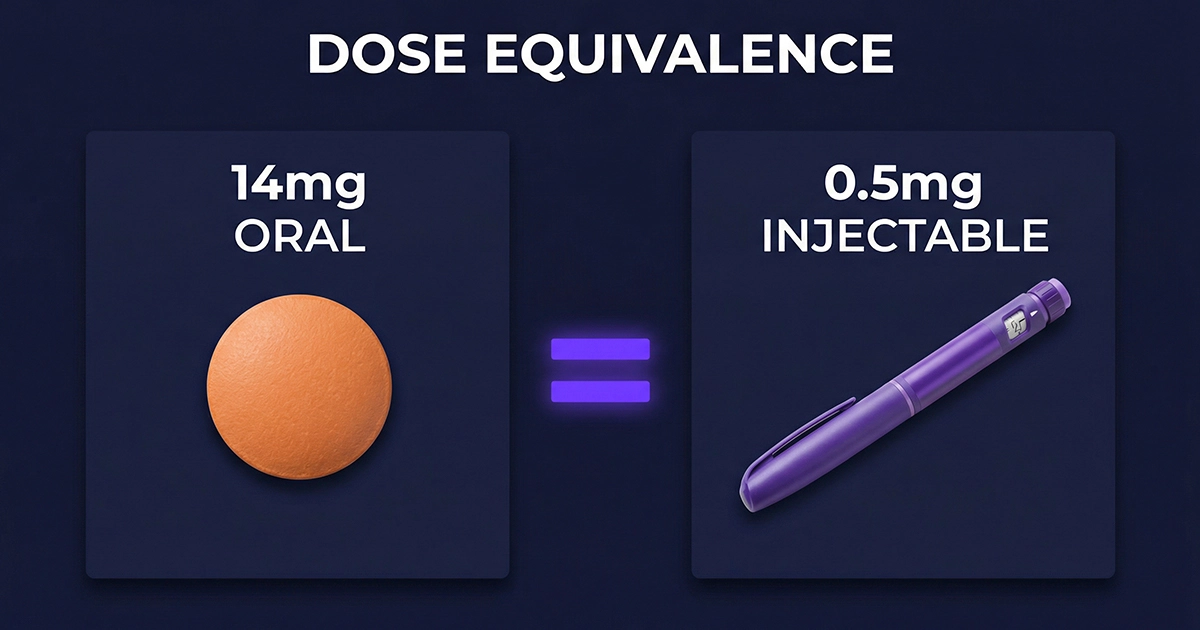
- The Dosage Math: 14 mg of Rybelsus is roughly equivalent to 0.5 mg of Ozempic due to Bioavailability. You are not lowering your dose; you are changing the delivery method.2
- The Lifestyle Win: Switching removes the strict "morning fasting" requirement of Rybelsus, allowing for immediate hydration and breakfast.
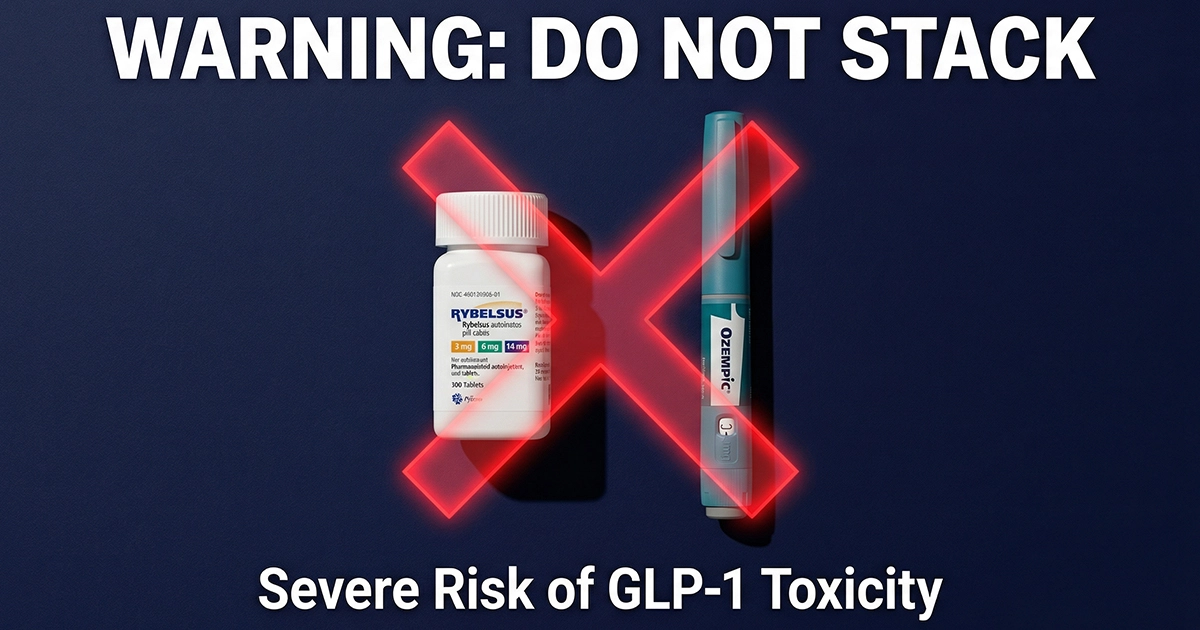
- Safety Critical: Never take both medications at the same time. This causes GLP-1 toxicity.
What This Switching Review Covers
- Why Oral Semaglutide Does Not Convert To A Direct Ozempic Dose
- What Timing And Washout Rules Matter During The Switch
- What To Expect When Restarting At A Lower Injectable Dose
- Which Questions To Raise With Your Prescriber Before Changing Forms
The "Bioavailability" Math: Why the Numbers Drop
The most confusing aspect of switching from Rybelsus to Ozempic is the drastic difference in milligrams. Patients often panic, thinking a drop from 14 mg to 0.5 mg means they are receiving 96% less medication. To understand why this isn't true, we have to look at Bioavailability.
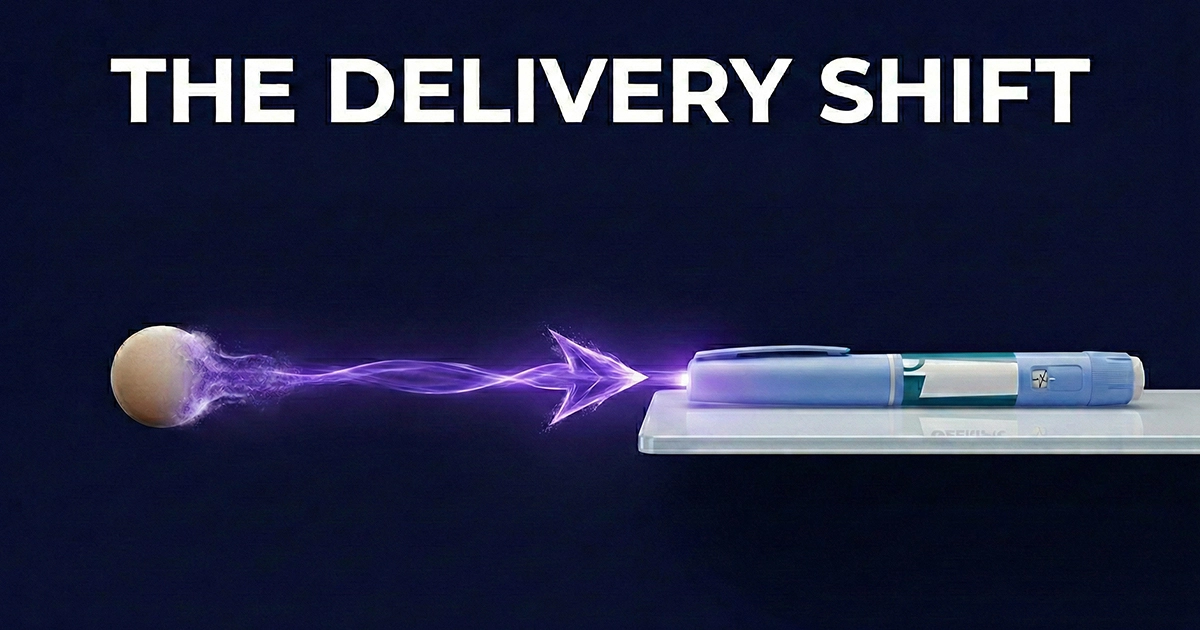
The Stomach Barrier
Rybelsus (oral semaglutide) is a marvel of engineering because it survives the stomach at all. The stomach is designed to destroy proteins, and semaglutide is a peptide (a small protein). To get it into your system, Rybelsus uses a molecule called SNAC to temporarily neutralize stomach acid.2
However, even with this technology, the absorption rate is incredibly low. Studies show that less than 1% of the oral dose actually reaches your bloodstream.2 The rest is digested.
The Injection Advantage
Ozempic is delivered via a subcutaneous injection (under the skin). It bypasses the stomach entirely, entering the bloodstream with near 100% efficiency over the course of the week.
The Equivalence Equation
When you do the math on Systemic Exposure (how much drug is actually working in your body), the conversion looks roughly like this:
You aren't downgrading your treatment; you are simply changing the delivery mechanism to a more efficient one.

Coach Claire says:
Wake up. Take a pill with exactly 4 ounces of water. And stare at the clock for 30 minutes until you can have coffee. Tired of this routine? You aren't alone! Switching from Rybelsus to Ozempic is one of the most common transitions we see in the community. It's often a move from "strict daily discipline" to "weekly freedom."
But the numbers can be scary. Why does the doctor want to move you from 14 mg (a big number) to 0.5 mg (a tiny number)? Did you fail? Are you starting over? Absolutely not. You are simply bypassing the stomach's harsh environment. Let's break down the science, the schedule, and exactly how to handle the swap without missing a beat.
The Conversion Ask your clinician about: Dose Mapping
While your prescriber will determine your specific path based on your A1C and tolerance, there are standard "switching maps" used clinically to ensure you don't experience a sudden drop in medication levels or a spike in side effects.
Scenario A: The "Starter" Switch
- Current Dose: Rybelsus 3 mg (Daily)
- New Target: Ozempic 0.25 mg (Weekly)
- The Logic: Since 3 mg is a non-therapeutic initiation dose, you will likely start at the bottom of the injectable ladder to ensure tolerance.1
Scenario B: The "Mid-Tier" Switch
- Current Dose: Rybelsus 7 mg (Daily)
- New Target: Ozempic 0.25 mg OR 0.5 mg (Weekly)
- The Logic: This is the gray area. Conservative prescribers may start you at 0.25 mg for 4 weeks to be safe. Aggressive care plan discussions might move you straight to 0.5 mg since your body is already acclimated to semaglutide.3
Scenario C: The "Maintenance" Switch
How to Switch: The overview Timeline
Unlike some medications that require a "washout" (a period of time with no drug in your system) to avoid interactions, semaglutide allows for a seamless handover. Because the half-life of the drug is approximately one week, you want to maintain steady levels.1
The "Next Day" Care plan discussion
Most clinicians follow the "24-hour rule."
- Day 0 (Sunday): Take your final Rybelsus pill in the morning as usual.
- Day 1 (Monday): Do not take a pill. Instead, administer your first Ozempic injection at any time of day.1
- Day 8 (Next Monday): Administer your second injection.
Why No Washout?
If you waited a week between stopping the pill and starting the shot, your blood levels of semaglutide would drop significantly. This could cause hunger noise to return and might make the side effects worse when you finally restart the injection. Continuity and compliance are both keys to comfort.3
Start Quiz
Find your best GLP-1 match
Where should compare start?
Changing treatment next?
Compare switching supportLifestyle Upgrade: Morning Routines vs. Weekly Freedom
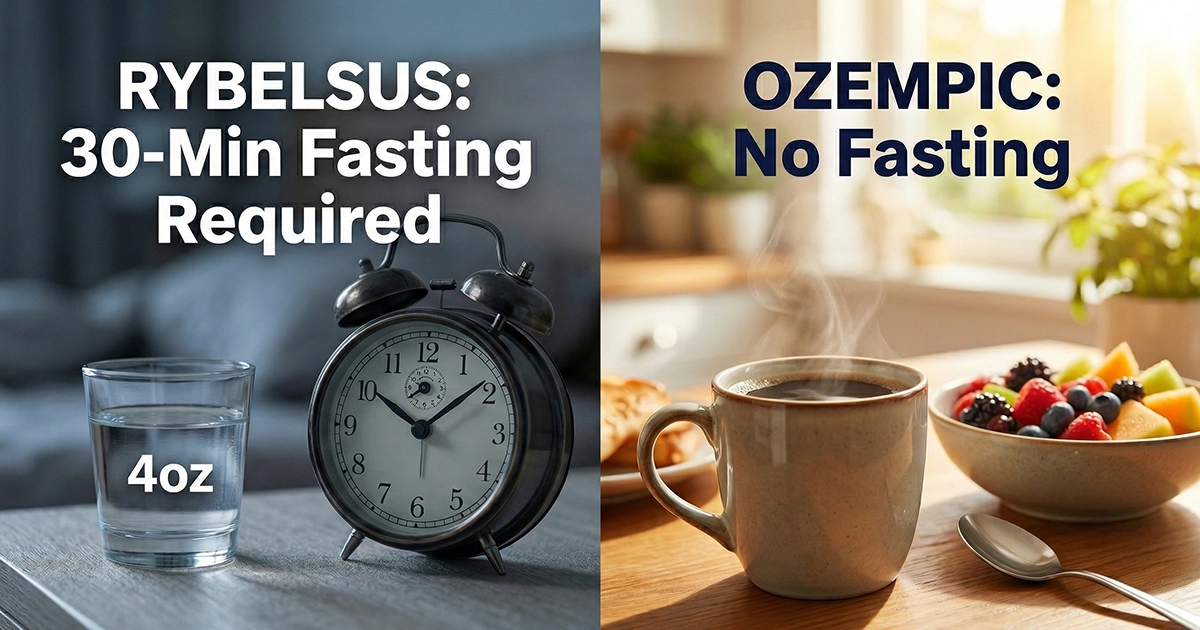
One of the primary drivers for switching from Rybelsus to Ozempic isn't medical-it's logistical. The "Rybelsus Routine" is notoriously strict, and failing to follow it ruins the drug's efficacy.
The Old Routine (Rybelsus)
- Wake Up: Immediately take pill.
- Water Cap: Must use no more than 4 oz of plain water.
- The Wait: Must wait 30 minutes (absolute minimum) before eating, drinking coffee, or taking other meds.
- The Failure Point: If you eat too soon, the drug doesn't work. If you drink too much water, the drug doesn't work.2
The New Routine (Ozempic)
- Wake Up: Drink coffee, eat breakfast, take other meds immediately.
- The Shot: Once a week, at any time of day, with or without food.
- Flexibility: 100% independent of meal timing.
This shift often improves "Nutritional Synergy." Because you don't have to fast for 30 minutes, you can immediately hydrate and consume high-protein foods upon waking, which can help stabilize blood sugar and cortisol levels earlier in the day.
Side Effect Management During the Swap
Even though you are staying on the same active ingredient (semaglutide), the delivery method changes the pharmacokinetics (how the drug moves through your body).
The "Peak" Effect
Oral Rybelsus has a daily peak and trough (the highest and lowest levels of a medication actively in the bloodstream), as your levels go up and down slightly every 24 hours. Ozempic provides a steady accumulation, but the day or two after injection can have a higher "peak" concentration than you are used to.1
Managing the Transition
- Nausea: This is most common 24-48 hours after the first injection.
- What to ask: Keep your meals strictly "bland and boring" for the first week of the switch. Avoid heavy fats or spicy foods on injection day.
- Hydration: Because you no longer have the 4 oz water restriction in the morning, use that freedom! Front-load your hydration early in the day.
Synergy Warning: The "Double Treatment Planning" Danger
In the world of GLP-1s, we often talk about "stacking" therapies (like adding protein or resistance training). However, when switching from Rybelsus to Ozempic, you must strictly avoid Medication Stacking.
The Toxicity Risk
Because both drugs are Semaglutide, taking them together is an overdose.
- Do NOT take your leftover Rybelsus pills on the days you feel the Ozempic "wearing off."
- Do NOT finish your bottle of pills after you have started the injections.
Using both simultaneously increases the risk of severe pancreatitis, gastroparesis (stomach paralysis), and severe hypoglycemia.4 Once you switch, the pills should be disposed of or stored safely as an emergency backup only if instructed by a doctor (e.g., if there is an injection shortage).
Positive Synergy: The Hydration Care plan discussion
The right synergy for this switch is Electrolytes. Since you may experience a shift in water retention, adding a daily, sugar-free electrolyte supplement can mitigate the "Ozempic Headache" often reported during the first few weeks of injections.
Costs and Access: The "Step Therapy" Game
For many patients, this switch is forced by insurance. This is known as "Non-Medical Switching" or formulary changes.
- Rybelsus: Often Tier 2 or 3 on formularies, specifically for Type 2 Diabetes.
- Ozempic: Also Tier 2 or 3 for Type 2 Diabetes, but frequently faces higher supply shortages.4
If you are switching due to cost, be aware that while the copay might be similar, the cash price of Ozempic is typically higher than Rybelsus. If you are reviewed for Rybelsus but denied Ozempic, you may need your doctor to file a "Prior Authorization" explaining that you failed the oral therapy (e.g., due to GI issues or inability to adhere to the fasting window).3
Coach Claire Sign-Off
You are ready to make the move. Switching from Rybelsus to Ozempic is usually a massive lifestyle upgrade. You get your mornings back, you get your coffee back, and you get the steady, powerful support of a weekly GLP-1.
Just remember: The math is weird (14 does equal 0.5!), the timeline is fast (start the next day), but the goal is the same: a healthier, metabolically balanced you. Don't be afraid to ask your doctor to start slow if you're nervous. You are in the driver's seat.
See you on the other side of the needle!
Frequently Asked Questions
1. Can I use my leftover Rybelsus pills if I run out of Ozempic?
Technically, yes, but only under doctor supervision. If there is a shortage, your doctor might have you use the pills to maintain your baseline, but you must stop the injections while taking them. Never take both at once.1
2. Does Ozempic work better for weight loss than Rybelsus?
Clinical trials suggest that injectable semaglutide (Ozempic/Wegovy) tends to result in slightly higher weight loss percentages than the oral version, largely due to higher bioavailability and better patient adherence (it's harder to mess up a weekly shot than a daily pill).3
3. Will I get the "Ozempic Face" if I switch?
"Ozempic Face" is just rapid weight loss. If the switch causes you to lose weight faster, facial changes are possible. Hydration and maintaining protein intake are your right defense.
4. What if I was on 7 mg Rybelsus? Do I go to 0.5 mg Ozempic?
This is the most common debate. Conservative doctors choose 0.25 mg to avoid side effects. Aggressive doctors choose 0.5 mg to maintain efficacy. Ask for the plan that fits your sensitivity level.1
5. Is the needle painful compared to the pill?
Most patients report the Ozempic needle is barely perceptible. It is a hair-thin (32G) needle that goes into fat, not muscle. The anxiety of the first shot is usually worse than the shot itself. Just remember you must follow the proper injection care plan discussions and hold the injector onto the site for the prescribed amount of time, regardless of your needle fright. This ensures the correct amount is delivered into your body.
Coach Claire's Cheat Sheet
Quick definitions used in this article.
References
- Novo Nordisk. (2023). Ozempic (semaglutide) Injection Prescribing Information. Novo Nordisk Medical Information. [top]
- Novo Nordisk. (2023). Rybelsus (semaglutide) Tablets Prescribing Information. Novo Nordisk Medical Information. [top]
- American Diabetes Association. (2024). Standards of Care in Diabetes-2024. Diabetes Care. [top]
- FDA. (2023). FDA Drug Shortages: Semaglutide Injection. U.S. Food & Drug Administration. [top]