
Medical Fact-Check: Data verified by The Editor on
The Science Behind My GLP-1 Weight Loss Transformation: Timeline, Costs, and Truths
What is a realistic GLP-1 transformation timeline?
A successful clinical transformation on GLP-1 agonists typically yields 15–20% total body weight loss over a period of 68 to 72 weeks[1]. While social media often highlights "hyper-responders" who lose weight rapidly, medical guidelines recommend a steady pace of 0.5–2 lbs per week to preserve muscle mass. True transformation is biological, involving the regulation of the "set point" in the hypothalamus.
Verified by The Editor ✓
🟣 Coach Claire says: "I honestly thought I was failing. Three weeks in, I’d lost exactly three pounds. Meanwhile, my TikTok feed was full of women dropping 20 pounds in a month and fitting into their high school jeans. If you feel like your progress is 'too slow,' you aren’t broken—you’re normal. Let’s look at the actual data behind the timeline."
When you start a GLP-1 program, you are often sold a "Before and After" photo. But the real story happens in the messy middle—the months where the scale stalls, the "food noise" flickers, and the pharmacy bills pile up. This isn't just a diary; it is a breakdown of the biological and financial reality of long-term weight management, verified against clinical data.
The Timeline: Viral Myths vs. Clinical Reality
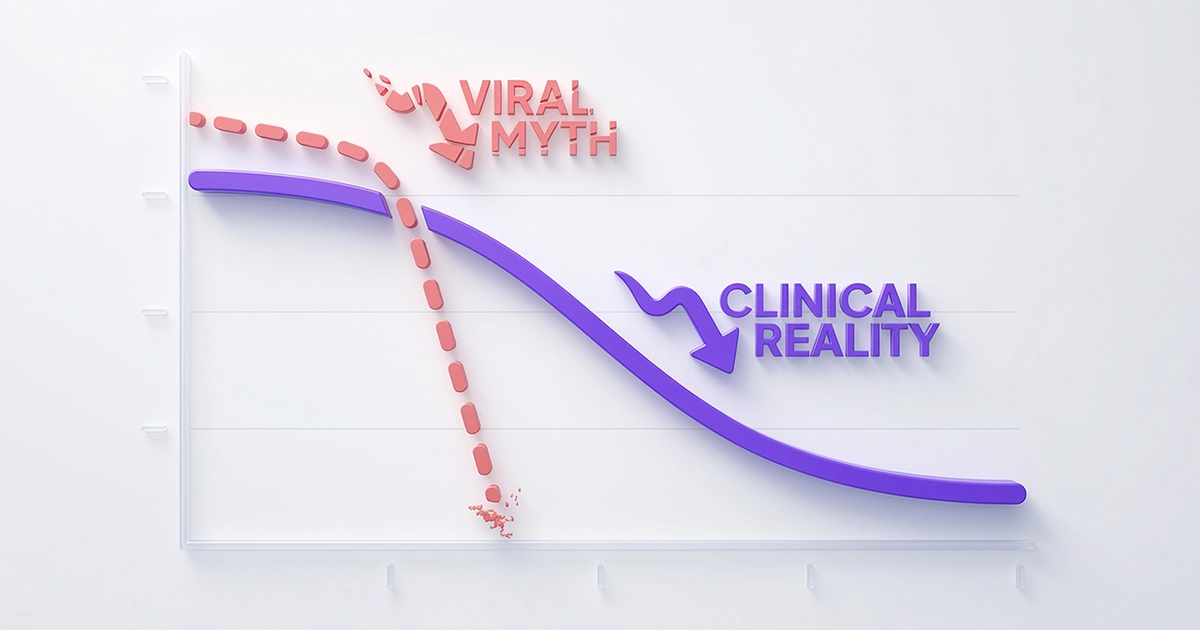
It is tempting to chase the rapid drops you see online. When I didn't lose 10 pounds in my first month, I panicked. But biologically, speed is not the goal.
⚠️ Medical Fact Check: The Dangers of "Rapid Loss"
Losing more than 3 lbs per week significantly increases the risk of sarcopenia (loss of lean muscle mass) and gallstones (cholelithiasis)[2]. The FDA-approved clinical guidance aims for a steady 0.5–2 lbs per week[3]. This pace allows your skin to retract and ensures your metabolic rate doesn't crash.
The Safe Path: Prioritize Protein Pacing (aiming for 100g+ daily) and resistance training. A slower graph means a stronger body at the finish line.
My "transformation" wasn't a straight line down. It was a series of steps. Months 1–3 were about titration (adjusting the dose). Months 4–6 were where the visible changes happened. And Month 12+ is where the real work of maintenance begins.
The Financial Reality: Budgeting for Biology
I didn't realize that finding a provider was just the down payment. The real cost is maintenance. You aren't buying a quick fix; you are budgeting for a monthly biological utility bill. Here is what the current market looks like for telehealth providers.
The "Food Noise" Shift
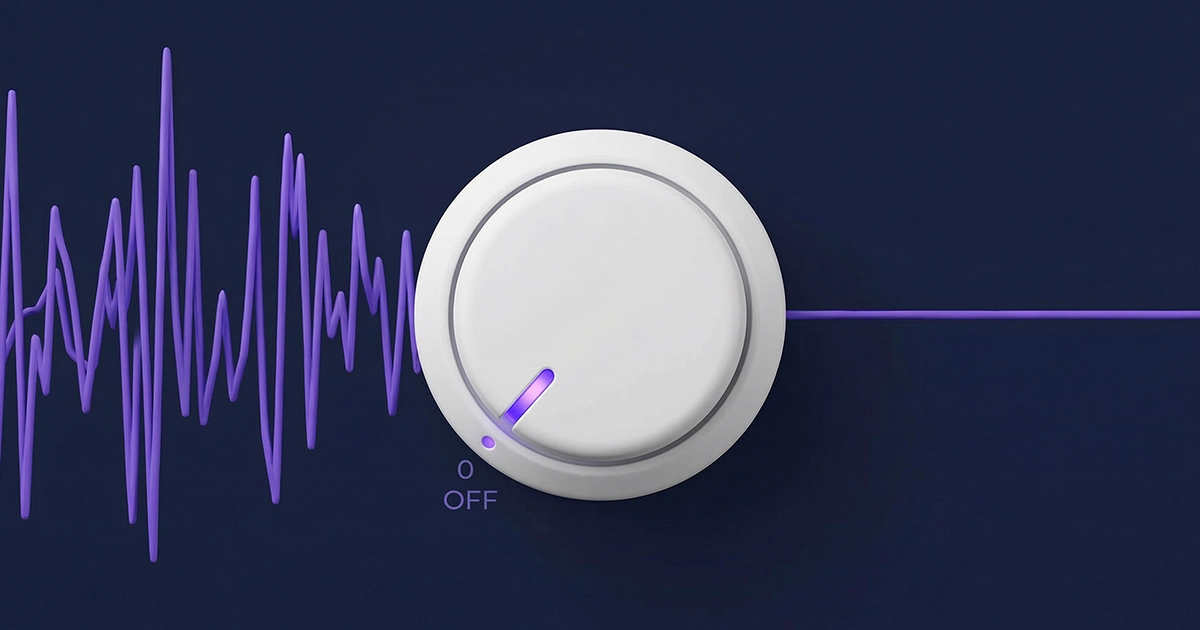
The biggest change wasn't the scale. It was the silence. For 30 years, my brain had a background radio station playing "What's for dinner?" on a loop. Around Week 5, someone turned the volume knob to zero.
The Science: This isn't willpower; it's neurochemistry. GLP-1 receptors are abundant in the hypothalamus (hunger center) and the mesolimbic system (reward center). By binding to these receptors, the medication dampens the dopamine-seeking behavior associated with cravings[4]. You aren't "stronger"—your brain is just quieter.
Choosing Your Route: A Quick Primer
If you are ready to start your own transformation, you generally have three paths. I wasted time calling local med spas before I understood how the industry works.
- 1. Local Med Spas: High touch, high cost ($500+). They often upsell "B12 shots" or "fat burners" you don't clinically need.
- 2. Direct Telehealth (Recommended): Lower cost ($178–$278), text-based or video check-ins. Efficient for most people who just need the medication and basic oversight.
- 3. PCP + Insurance: The "Gold Standard" ($25 copay), but requires navigating complex Prior Authorizations and strict BMI requirements.
Disclaimer: This article is for educational purposes and does not constitute medical advice. Weight loss results vary based on biology, adherence, and dosage. Always consult your doctor before starting GLP-1 therapy.
About the Author: This article was written by The Editor (Medical Fact-Checker) in collaboration with "Coach Claire" (Patient Advocate). FindMyGLP1.com is an independent informational resource.
Start your transformation
Clinical References
- Wilding JPH, et al. Once-Weekly Semaglutide in Adults with Overweight or Obesity. N Engl J Med. 2021;384(11):989. (STEP 1 Trial). PubMed ↩
- Wegovy® (semaglutide) [Prescribing Information]. Novo Nordisk Inc.; 2023. Section 5.4: Acute Gallbladder Disease. FDA Label ↩
- Centers for Disease Control and Prevention (CDC). Losing Weight. Healthy Weight, Nutrition, and Physical Activity. CDC.gov ↩
- Lau J, et al. Discovery of the Once-Weekly Glucagon-Like Peptide-1 (GLP-1) Analogue Semaglutide. J Med Chem. 2015;58(18):7370-80. ACS ↩