Ozempic Split Dosing: Microbiology Risks, the 56-Day Rule, and Dosing Inaccuracy The Hidden Dangers of "Hacking" Your Pen


THE BOTTOM LINE
Ozempic split dosing is the unauthorized practice of dividing a weekly dose into two smaller injections to manage nausea or hunger. Clinically, this is inherently unsafe. It requires "click counting" on a pen not calibrated for intermediate volumes and frequently results in using medication beyond its 56-day preservative window. This creates a significant risk for Cellulitis, Staph infections, and Hypoglycemia due to dosing instability.

👩⚕️ Coach Claire says:
I see the videos all over TikTok. People 'counting clicks' like they’re cracking a safe. I get the appeal. That late-week 'food noise' is real, and nobody likes feeling nauseous on injection day.
But listen up: your Ozempic pen is a precision medical device, not a DIY project. 'Hacking' your dose is a gamble. You might save a few dollars, but you risk accidentally double-dosing yourself (hello, severe vomiting) or injecting practically nothing.
Worse, reusing needles opens the door to nasty skin infections that no amount of concealer can hide. Let’s look at why the 'click-counting' trend is one you need to skip.
Microbiology: The 56-Day Preservative Rule
The primary clinical hazard of split dosing is the biological instability of the medication cartridge. Ozempic (semaglutide) pens are multi-dose devices formulated with phenol, a chemical preservative essential for maintaining the sterility of the aqueous solution. Phenol works by disrupting the cell membranes of potential bacterial contaminants, effectively preventing microbial proliferation within the cartridge. 1
The "Safety Cliff"
However, phenol has a finite efficacy window once the pen's rubber septum is first punctured. The "56-day rule" listed in the FDA prescribing information is not a marketing suggestion; it is a biological safety cliff.
Once the seal is broken, the clock starts ticking. After 56 days of exposure to room temperature and repeated punctures, the concentration and effectiveness of the phenol begin to decline due to oxidation and evaporation. As the preservative degrades, the solution transitions from a sterile environment to a viable growth medium for pathogens.
"Stretching" a high-volume pen (such as using a 8mg/3mL pen intended for 2.0mg doses to take 0.25mg doses) over 12 or 16 weeks via split dosing explicitly violates this safety parameter. Injecting medication from a compromised cartridge can lead to localized abscesses, cellulitis, or systemic bacterial entry. 1 3
Infection Risk: Cellulitis & Staph
Split dosing doubles the mechanical requirements of the injection process, which in turn doubles the risk of procedural error. By dividing a weekly dose into two smaller injections, a patient must perform eight to nine punctures per month rather than four. This leads to two critical safety failures: needle exhaustion and septal compromise. 4
The Reality of Reuse: Staph and Cellulitis
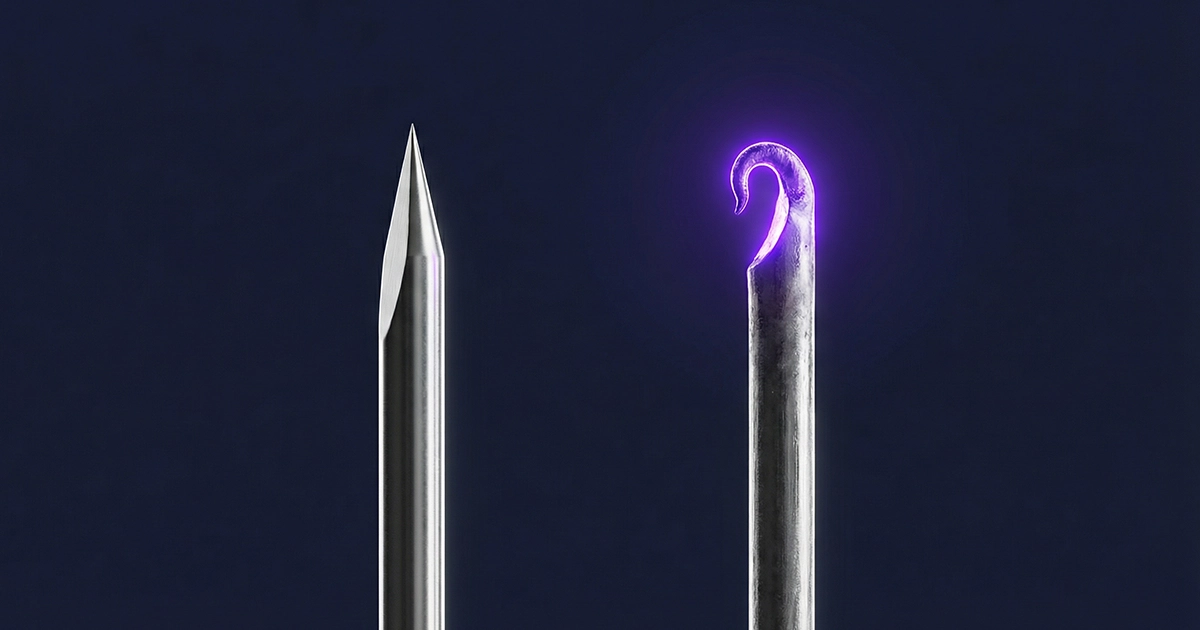
Standard Ozempic prescriptions include a specific number of sterile NovoFine needles corresponding to the weekly dosing schedule. Patients who split doses frequently run out of needles, leading to needle reuse.
A reused needle carries microscopic skin bacteria, primarily Staphylococcus aureus ("Staph"), from the previous injection. Re-inserting a non-sterile needle into the pen inoculates the remaining fluid with these bacteria.
- Cellulitis (The Common Outcome): This is a bacterial infection of the deeper layers of the skin. It presents as an area that is red, swollen, hot to the touch, and tender. It often spreads rapidly and requires antibiotic treatment.
- The Sepsis Escalation (The Severe Outcome): If cellulitis is left untreated, or if the bacteria enter the bloodstream directly, it can lead to Sepsis—a life-threatening response to infection that can lead to tissue damage and organ failure. 4 5
The Alcohol Wipe Trap:
⚠️ Critical Warning ⚠️
Myth: "I can just wipe the needle with alcohol to clean it."
Fact: Alcohol wipes clean the surface, but they cannot sterilize the internal lumen (the hollow tube) of the needle where blood and bacteria hide. Furthermore, alcohol removes the silicone coating on the needle, making the next injection painful and increasing tissue trauma.
The Mechanics of "Click Counting"
Why Clicks Are Inaccurate
The most common method for split dosing is "click counting": turning the dose dial a specific number of "clicks" to approximate a half-dose.
The Medical Reality
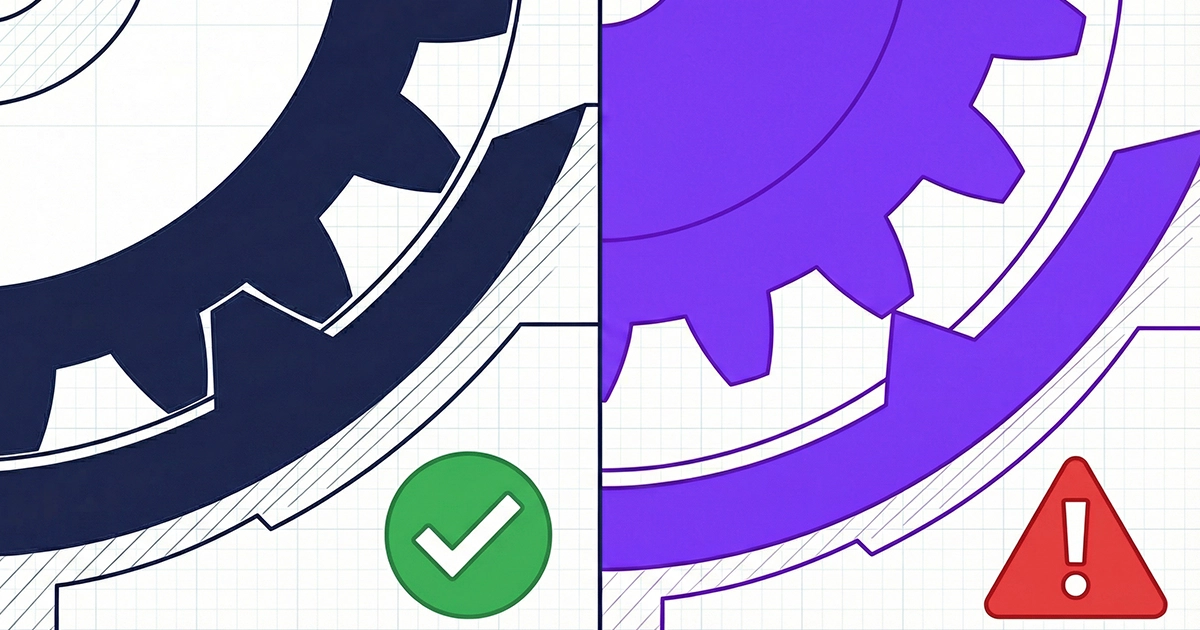
The mechanical ratchet in an Ozempic pen is a dose-selector, not a volumetric measuring tool. The pen is calibrated to deliver accurate volume only when the dial clicks into the specific window for the prescribed dose (e.g., 0.25, 0.5, 1.0, or 2.0 mg).
Between these calibrated stops, the relationship between rotation and plunger movement is non-linear due to:
- Mechanical Play: The internal spring mechanism has tolerance gaps ("slop") that are tightened only when a full dose is selected.
- Dead Space: The volume of fluid remaining in the needle hub varies.
- Flow Rate: Partial clicks do not engage the full hydraulic pressure of the plunger, leading to under-dosing. 6
The Hypoglycemia Hazard
Relying on clicks leads to "Zig-Zag" Dosing, where blood levels fluctuate wildly.
- The Overdose Risk: If you miscount or the spring mechanism slips, you may accidentally administer a higher dose. For diabetics, this can cause Hypoglycemia (dangerously low blood sugar), leading to dizziness, confusion, or fainting. For non-diabetics, it often triggers severe vomiting and dehydration.
- The Underdose Risk: Consistently under-dosing prevents the drug from reaching the steady-state concentration needed for weight loss, resulting in a "therapeutic stall."
Pharmacokinetics: The "Steady State" Myth
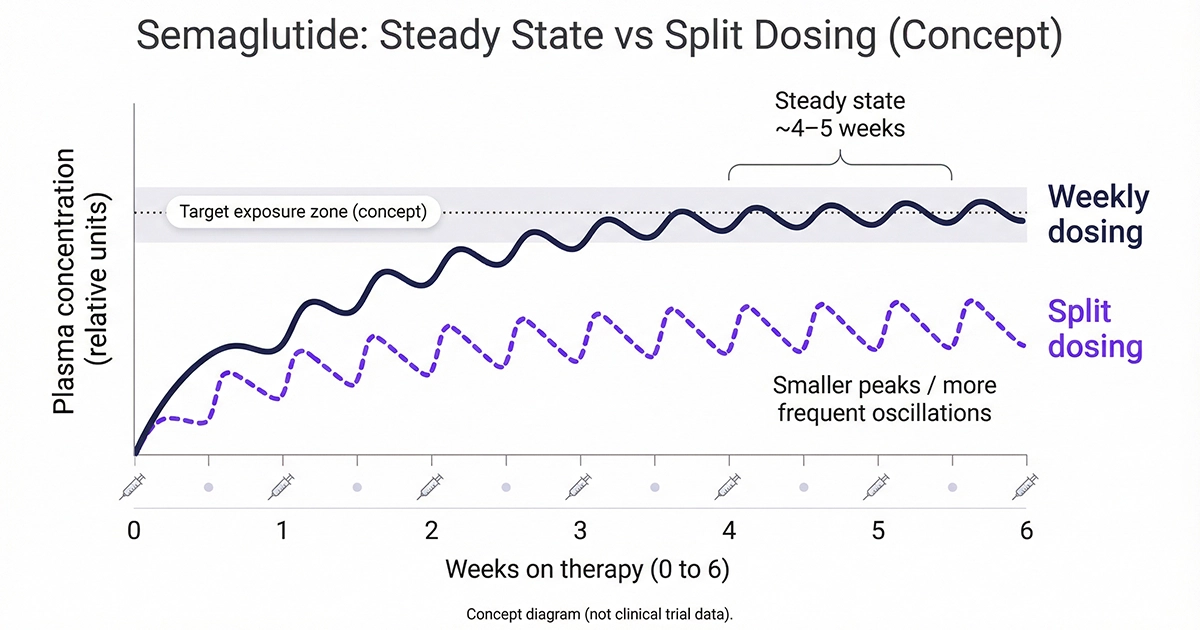
The logical basis for split dosing is often the desire to avoid the "trough" period: the final 48 hours before the next shot when hunger returns. Semaglutide has a terminal half-life of approximately 165 hours (roughly 7 days). While this is a long half-life, the concentration in the blood does decline toward the end of the week. 7
However, splitting the dose does not necessarily resolve this. To achieve therapeutic weight loss, the semaglutide molecule must reach a specific "peak" plasma concentration to cross the blood-brain barrier and saturate the GLP-1 receptors in the hypothalamus.
By taking two smaller doses, a patient may never reach the threshold concentration required for full satiety signaling. Clinical trials (such as the STEP trials) utilized once-weekly dosing because that rhythm allows the drug to build to a stable Steady State over 4 to 5 weeks.
Altering this rhythm prevents the pharmacokinetics of the medication from reaching the therapeutic levels established as effective in the manufacturer's clinical data. 1 7
⚠️ Critical Warning: Split Dosing Risks
- Infection: Using a pen beyond 56 days or reusing needles significantly increases the risk of Staph infection and Cellulitis.
- Hypoglycemia: Erratic dosing via "click counting" can lead to sudden drops in blood sugar or severe gastrointestinal distress.
- Viral Transmission (NEVER SHARE): Never let a friend or family member "try" your pen, even with a new needle. Biological backflow (regurgitation) can pull blood cells into the cartridge after an injection, creating a vector for transmitting bloodborne pathogens like HIV or Hepatitis. 1 6 8
The Safe Path: Use the pen only at the doses marked on the dial. If you cannot afford the brand-name medication, discuss a Compounded Semaglutide alternative from a PCAB-accredited pharmacy. Discard any pen 56 days after the first puncture.
Economics: The Cost of "Hacking"
For many, split dosing is a financial strategy to mitigate the high cost of brand-name Ozempic. Because a 2.0 mg pen (containing 8.0 mg total) often costs the same as a 0.5 mg pen (containing 2.0 mg total), patients attempt to "stretch" the larger pen.
While this math appears sound on a spreadsheet, it ignores the cost of risk.
- Cost of Pen Extension: ~$0 (Savings of $800/month).
- Cost of Cellulitis Treatment: Urgent care visit + oral antibiotics (~$300).
- Cost of Sepsis/Abscess: ER Visit, I&D (Incision and Drainage), IV Antibiotics (~$5,000+).
If financial constraints are preventing you from adhering to the FDA-approved dosing schedule, "hacking" the medication is the highest-risk solution.
Clinically Sound Alternatives
If you are struggling with nausea or "food noise" at the end of the week, there are safer, evidence-based options to discuss with your healthcare provider:
- Extended Titration: If nausea is the primary concern, your clinician may recommend staying on a lower dose (like 0.25 mg or 0.5 mg) for 8 weeks instead of 4. This allows the gastrointestinal tract to acclimate without the risks of click-counting.
- Compounded Semaglutide: If cost is the driver, Compounded Semaglutide from a PCAB-accredited pharmacy is a legal, lower-cost alternative. These are dispensed in vials, allowing for precise, sterile dosing via a fresh syringe for every injection, eliminating the "dead space" and preservative issues of reusing a pen cartridge. 2
- Protein Density: To manage late-week hunger, focus on increasing protein density (aiming for 30g per meal) and fiber intake on days 5 and 6 of your cycle. This provides mechanical satiety as the semaglutide levels begin their weekly decline.
Coach Claire's Sign-Off
I know late-week hunger can be frustrating, and nobody likes that "Ozempic flu" feeling. But please, do NOT try to be your own pharmacist. Your safety is worth more than the few dollars you save by stretching a pen past its expiration date.
If your current dose isn't working for you, have a real, honest conversation with your doctor about switching things up. There are safer ways to get the results you want without risking a nasty infection or a midnight trip to the ER!
Coach Claire's Cheat Sheet
Quick definitions used in this article.
- Phenol
- A chemical used to kill bacteria
- Microbial Proliferation
- Rapid growth of bacteria
- Septum
- The rubber seal the needle pokes through
- Systemic
- Spreading through the entire body
- Cellulitis
- A painful, spreading skin infection
- Sepsis
- Life-threatening reaction to infection
- Volumetric
- Based on measuring liquid volume
- Hypoglycemia
- Dangerously low blood sugar
- Satiety
- Feeling full and satisfied
- Pharmacokinetics
- How drugs move through the body
Frequently Asked Questions
What is Ozempic split dosing?
Ozempic split dosing is the unauthorized practice of dividing a weekly dose into two smaller injections to manage nausea or hunger. It frequently results in using medication beyond its 56-day preservative window.
Is Ozempic split dosing safe?
Clinically, this is inherently unsafe. It requires "click counting" on a pen not calibrated for intermediate volumes and creates a significant risk for Cellulitis, Staph infections, and Hypoglycemia due to dosing instability.
What is the 56-day rule?
Once the pen's seal is broken, the clock starts ticking. After 56 days of exposure to room temperature and repeated punctures, the concentration and effectiveness of the phenol preservative begin to decline, allowing the solution to transition into a viable growth medium for pathogens.
Can I rely on click counting for dosing?
No. The mechanical ratchet in an Ozempic pen is a dose-selector, not a volumetric measuring tool. Relying on clicks leads to "Zig-Zag" Dosing, where blood levels fluctuate wildly, increasing the risk of Hypoglycemia or therapeutic stall.
References
- U.S. Food and Drug Administration (FDA). Ozempic (semaglutide) Injection: Prescribing Information & Medication Guide. Drugs@FDA: FDA-Approved Drugs. Application No. 209637. Click to View Source [top]
- U.S. Food and Drug Administration (FDA). FDA’s concerns with unapproved GLP-1 drugs used for weight loss. FDA.gov. Published 2024. Click to View Source [top]
- United States Pharmacopeia (USP). USP General Chapter <797> Pharmaceutical Compounding – Sterile Preparations. USP.org. Click to View Source [top]
- Centers for Disease Control and Prevention (CDC). The One & Only Campaign: Injection Safety for Healthcare Providers. CDC.gov. Click to View Source [top]
- Mayo Clinic. Cellulitis: Symptoms and causes. Mayo Clinic. Click to View Source [top]
- Ontario College of Pharmacists (OCP). Preventing Ozempic®-Related Medication Events: Analysis of Error Reporting. OCPInfo.com. Published 2024. Click to View Source [top]
- Blundell J, et al. Effects of once-weekly semaglutide on appetite, energy intake, control of eating, food preference and body weight in subjects with obesity. Diabetes Obes Metab. 2017;19(9):1242-1251. Click to View Source [top]
- Centers for Disease Control and Prevention (CDC). Infection Prevention during Blood Glucose Monitoring and Insulin Administration. CDC.gov. Click to View Source [top]